Beef & Lamb and Dairy Standards Consultation
We’re inviting feedback on proposed changes to the Red Tractor Beef & Lamb and Dairy Standards.
Committees of technical experts – the Beef & Lamb Technical Advisory Committee and the Dairy Technical Advisory Committee – which represent the whole supply chain, have reviewed every Beef & Lamb and Dairy standard. They can justify every requirement that remains, and have reached consensus on changes that make standards clearer and more proportionate. These proposals have been agreed by the Beef & Lamb and Dairy Sector Boards. They’re now seeking to understand what these changes could mean in practice, particularly to the farms and businesses that reply on them for assurance.
Your feedback shapes the final standards. The Beef & Lamb and Dairy Technical Advisory Committees and Sector Boards will consider all feedback before finalising the revised standards.
Review the proposals and share your feedback
Open to all stakeholders until 3 November 2026.
Download the pdf of proposed changes
A message from the sector chairs
Beef & Lamb
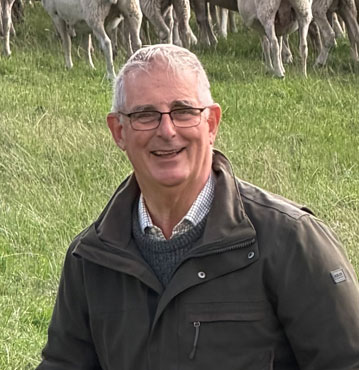
“This review has been thorough, and has been led by people embedded in the beef and lamb sector, including those who understand what it’s like to run a farm. I’d encourage everyone involved in the industry to look at what’s proposed and tell us what it would mean for you – this consultation only works if we hear from you directly.”
John Dracup, Beef & Lamb Sector Chair

Dairy
“These proposals reflect what the Dairy Technical Advisory Committee has heard from farmers and other stakeholders over several years – standards that are clearer, and welfare improvements that make a real difference, ensuring standards remain fit for the future. Please take the time to review them and have your say before 3 November.”
Tim Lock, Dairy Sector Chair
How the proposals were developed
Collaboration and consensus
In 2025, Red Tractor committed to reviewing its standards with the objective of delivering real, tangible change for farmers and growers. This is that review. It is a review for the industry, by the industry. Red Tractor staff facilitated discussion; but industry representatives are the collective decision makers.
Through 2025 and 2026 the Beef & Lamb and Dairy Technical Advisory Committees reviewed every standard line by line: Beef & Lamb over nine two-hour online meetings and one four-hour in-person session; Dairy over ten two-hour online meetings and four four-hour in-person sessions. Every standard was tested against a defined set of criteria – legislation, industry best practice, historical compliance levels, applicability, reducing audit burden and clarity.
The changes aim to deliver the priorities set by the Sector Boards in December 2025, and incorporate advice from external experts and government agencies including the Food Standards Agency, Animal and Plant Health Agency (APHA), Agriculture and Horticulture Development Board (AHDB), Agricultural Industries Confederation (AIC), certification bodies, universities and independent veterinary expertise, alongside targeted consultation with industry groups including British Cattle Veterinary Association (BCVA), Sheep Veterinary Service (SVS), retailers and processors.
Assurance beyond standards
This consultation focuses on the standards, but experiences of assurance are also influenced by how standards are applied and delivered. In parallel with this review, Technical Advisory Committees and Sector Boards, supported by the Red Tractor team, are looking at assessment cycles, what is checked during assessments, and how technology can better support assessments. The aim is to deliver further efficiencies while maintaining rigour. More on this will follow in 2027.

Beef & Lamb Governance
Find out more about the Beef & Lamb Sector Board and TAC, and their objectives
Dairy Governance
Find out more about the Dairy Sector Board and TAC, and their objectives
Summary of the proposed changes
Beef & Lamb
Beef & Lamb standards move from 106 standards and 267 audit points to 105 standards and 149 audit points – a 32% reduction overall, primarily achieved by consolidating and reordering requirements. The Technical Advisory Committee is also proposing a small number of additional requirements on practical welfare and resilience, covering shade in extreme weather, feed safety, disease contingency planning and housing.
Dairy
Dairy standards move from 157 standards and 377 audit points to 172 standards and 238 audit points – a 23% reduction in audit points overall. Alongside the changes shared with Beef & Lamb, Dairy proposes a new code of conduct on animal care and handling, and new recommendations on cow comfort, environmental enrichment and foot-trimming competence.
Standards review: what’s been proposed
The result is a set of standards that are clearer, better ordered and, where justified, less prescriptive – related requirements now sit together, and a clear justification explaining why a requirement exists, together with guidance on what needs to be done. Beef & Lamb and Dairy now also share a common standards base – all Beef & Lamb standards also apply to Dairy – reducing duplication for farmers in England. Themes below are grouped by who they apply to, and marked as a standard (assessed for compliance) or a recommendation (best practice, compliance is not required). Select a theme to read the detail.
Beef & Lamb + Dairy
Standard
A health review built around your farm
Annual, farm-specific livestock health review with your vet, plus a 12-month action plan.
Standard
Practical welfare and resilience
Shade in extreme weather, feed safety, disease contingency planning, stocking density and slat design.
Recommendation
Pain relief
Used for procedures and conditions likely to cause pain – calving, lameness, mastitis and more.
Standard
Standards that are clearer and reflect how farms work
Requirements merged, reordered and simplified; training requirements grouped in one place.
Standard
Nutrient management planning
Replaces the manure management plan and matches spreading to crop need and soil type. Applies in England only.
Dairy only
Standard
A code of conduct on animal care and handling
Every person who handles animals completes and signs the code of conduct – a new audit point.
Standard
Milk production, medicines and feed planning
Milk production section restructured to follow the structure of legislation, plus revised antibiotic and medicine training requirements.
Recommendation
Pain Cow comfort, enrichment and competence
More cubicles than cows, environmental enrichment, and trained, competent foot trimmers.
What’s not changing
- Most of what farmers do day to day will not change. Roughly three quarters of what Red Tractor asks reflects legal obligations.
- The standards will continue to provide customer confidence and assurance of food safety and responsible production.
- Earned recognition with regulators and some customers will remain.
- Farmers will still need a nominated vet, and you’ll still pay for the health review and the action plan.
- Nothing changes until 2027, following UKAS approval.
- The assessment itself is unchanged for now – work to review assessment cycles is separate and ongoing.

Download the pdf of proposed changes
Read the existing Beef & Lamb standards
Read the existing Dairy standards
Review the proposed changes in detail and take part in the consultation
This consultation is open to all stakeholders with an interest in British food and farming. The consultation is open for six weeks, from 22 September to 3 November 2026.
The Beef & Lamb and Dairy Sector Boards want to hear all points of view, and are particularly interested in how practical the proposals are for your farm or business. Tell us where a requirement would be difficult, unclear or disproportionate on your system, and whether there is a better way to word it or a better way to evidence it. Where a requirement is there because the law requires it, we will say so. Where it is there because the market or the consumer expects it, we will explain why, and we will listen.
We value input from all stakeholders, particularly feedback that will help us to improve the efficiency and effectiveness of farm assessments. Small changes count — in the last standards review, single-word changes proposed by respondents were adopted because they made a standard clearer.

To ensure your feedback is considered, please use the online form. Feedback shared via email or verbally cannot be incorporated into overall analysis.
What comes next
Feedback will be shared with the Beef & Lamb and Dairy Technical Advisory Committees and Sector Boards for their consideration before updates to the standards are confirmed in 2027. They will either agree final proposals, make changes in response to feedback, or return specific areas for further consultation if needed. Once standards are agreed assessor training, operational updates and UKAS approval follow with the final standards published at least three months before implementation.
Review the proposals and share your feedback