Pigs Standards Consultation
We’re inviting feedback on proposed changes to the Red Tractor Pigs Standards.
A committee of technical experts – the Pigs Technical Advisory Committee – representing the whole supply chain, have reviewed every Pigs standard. They can justify every requirement that remains, and have reached consensus on changes that make standards clearer and fit for the future. These proposals have been agreed by the Pigs Sector Board. They’re now seeking to understand what these proposals would mean in practice, particularly to the farms and businesses that rely on them for assurance.
Your feedback shapes the final standards. The Pigs Technical Advisory Committee and Sector Board will consider all feedback before finalising the revised standards.
Review the proposals and share your feedback
Open to all stakeholders until midnight on 22 December 2026.
A message from the sector chair
“Red Tractor is committed to making meaningful changes that support pig producers while maintaining confidence in our standards. This consultation is a genuine opportunity for farmers to help shape proposals designed to reduce audit burden, strengthen animal health and welfare and continue to protect the reputation of British pig production. We are acutely aware that this consultation comes at a particularly challenging time for the pig sector. Many producers are facing significant financial pressures and uncertainty, and we recognise the difficult circumstances that many businesses are navigating. That’s why it’s important to stress that any changes arising from this review will not come into effect until late 2027.”
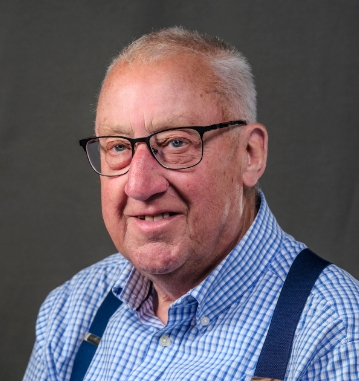
Stewart Houston, Pigs Chair
How the proposals were developed
Collaboration and consensus
Last year Red Tractor committed to reviewing its standards with the objective of delivering real, tangible change for farmers and growers. This is that review. It is a review for the industry, by the industry. Red Tractor staff facilitated discussion; but industry representatives are the collective decision makers.
Change was already underway for the Red Tractor Pigs Scheme. In 2025 Red Tractor consulted on a modular approach to welfare standards, with the aim of improving clarity for shoppers and reducing audit burden for farms participating in multiple assurance schemes. There was clear industry support and, as a result, two new modules were launched in December 2025: Enhanced Welfare Outdoor Bred and Free Range.
Alongside this, there is growing momentum within the UK pig sector to phase out conventional farrowing crates. In last year’s consultation we asked for views on Red Tractor supporting the transition by publishing clear standards for alternative farrowing systems. Responses were split and the Pigs Board agreed to give it some more thought. Red Tractor has continued to engage with the sector on this important issue and in response to producer calls for clarity a specification for flexible farrowing is now being proposed.
Earlier this year the Pigs Technical Advisory Committee reviewed every standard line by line. Every standard was tested against a defined set of criteria – legislation, industry best practice, historical compliance levels, applicability, reducing audit burden and clarity.
The changes aim to deliver the priorities set by the Pigs Board in December 2025, and incorporate advice from external experts and government agencies including the Food Standards Agency (FSA), Department for Environment Food and Rural Affairs (DEFRA), Animal and Plant Health Agency (APHA), certification bodies and universities, alongside targeted consultation with industry groups including National Pig Association (NPA), Agriculture and Horticulture Development Board (AHDB), Pig Veterinary Society (PVS), retailers and processors.
Pigs Governance
Find out more about the Pigs Sector Board and TAC, and their objectives
Assurance beyond standards
This consultation focuses on the standards, but experiences of assurance are also influenced by how standards are applied and delivered. In parallel with this review, Technical Advisory Committees and Sector Boards, supported by the Red Tractor team, are looking at assessment cycles, what is checked during assessments, and how technology can better support assessments. The aim is to deliver further efficiencies while maintaining rigour. More on this will follow in 2027.
Summary of the proposed changes
The Pigs TAC reviewed more than 600 requirements, refined existing requirements, proposed new ones and removed what was superfluous or unclear. The Pigs Sector Board have scrutinised the work of the TAC and agreed with their proposals through consensus. New welfare and biosecurity requirements are proposed, to ensure the standards remain fit for the future. This includes a suite of standards to support a transition from conventional farrowing crates to alternative systems, for those looking to make the move.
Standards review: what’s been proposed
A clearer, better structured set of requirements with an emphasis on the things that make a difference to the pigs, the business and the customer. Proposed changes are grouped into themes below. Select a theme to read the detail.
Standards to support an industry-led transition to flexible farrowing
Why
With industry and policymakers recognising the need to transition away from conventional farrowing crates towards alternative systems that balance sow and piglet welfare with stockperson safety, producers have called for clear standards and pen specifications to support future planning and investment decisions.
What is proposed
Red Tractor would prohibit installation of new (or new to you, i.e. second-hand) conventional farrowing crates from the date the new standards are implemented – expected late 2027. Alongside this, a suite of requirements for flexible and free-farrowing systems covering pen size, design and management.
What it means in practice
Red Tractor is not proposing to prohibit the use of conventional farrowing crates at this stage, but any new builds or upgrades to existing farrowing accommodation would need to be with flexi- or free-farrowing systems. Repairs to individual conventional crates would be allowed, to ensure safety. We recognise the significant leadership, investment and risk undertaken by early adopters to drive welfare improvements, so any flexi-pens already installed or in progress prior to standards launch will be accepted even if their pen dimensions don’t quite meet the requirements.
Red Tractor’s proposed approach to supporting a transition away from conventional farrowing crates has been welcomed by NPA and AHDB.
Protecting pigs from heat stress
Supporting pig welfare with stronger heat stress contingency planning and updated space requirements.
What’s proposed
A new recommendation for cooling measures in indoor pig units. Greater emphasis on the farm’s extreme weather and heat stress plan, including situations it must cover, an annual review and staff being familiar with its contents. Rapid response to critical ventilation alarms and a record of incidents and response time. A requirement for more space for pigs reared to a heavier finishing weight.
Why
Hot weather events are becoming the norm rather than an exception. This is a key animal welfare concern which can be managed through good preparation and preventive measures.
What it means in practice
The proposed standards are not prescriptive about what you must do; we recognise that each farm has a different set-up and location. Rather, a range of measures are provided as guidance, with emphasis on producers assessing their farm’s risk factors and having contingency plans in place.
We expect that the requirement for more space for heavier pigs will be managed effectively through split marketing.
Moving, handling and euthanasia standards strengthened
Promoting a stronger culture of care through improved welfare checks, handling and euthanasia procedures.
What’s proposed
Existing moving and handling best practice has been moved to a dedicated new section. Daily livestock checks are proposed to increase to twice a day. The record of instances of non-permitted euthanasia, where used in an exceptional emergency, has been formalised as a requirement where it was guidance previously. A new requirement for back-up euthanasia equipment is also proposed.
Why
Through making the requirements more explicit, there is greater clarity and emphasis on what is and isn’t acceptable, with clear routes for recording non-compliance where issues are found. Humane euthanasia is another area that requires vigilance and the standards have been strengthened to ensure clarity around expectations.
What it means in practice
Extra farm checks, back-up euthanasia, along with an additional record-keeping requirement, with the aim of demonstrating due diligence and supporting a culture of care.
Careful and compassionate pig handling is paramount to ensuring good welfare and upholding the industry’s reputation.
Enhancing biosecurity to protect against disease threats
What’s proposed
An annual quantitative biosecurity assessment – carried out by the farm’s vet – has been proposed as a recommendation for most, but as a requirement for persistent and high users of antibiotics. New requirements to ensure shower facilities, where provided, are of an acceptable standard. The existing requirement for a Wild Animal Control Plan on outdoor units would be extended to indoor units. And the visitor record standard has been strengthened.
Why
We know the industry recognises that the threat of African Swine Fever and other diseases is not going away. Good biosecurity reduces the risk of the unthinkable happening. The biosecurity risk assessment proposal has been included to support the ambitions of RUMA’s Targets Taskforce.
What it means in practice
There is no requirement for units to have shower facilities, but where a farm has a shower on/off policy certain standards would need to be met. We have not been prescriptive about which biosecurity assessment tool to use, but available options are signposted. It’s unlikely you’d need to pay to use a quantitative biosecurity assessment tool, but you may need to cover the extra time for your vet to carry it out.
Recommendations do not automatically become future standards. Some recommendations have remained recommendations since the scheme began.
Clear standards that are fit for the future
Standards that are clearer, more pig-specific and showcase a culture of care.
What’s proposed
Requirements have been merged, sections reordered, related topics grouped, and prescriptive detail has been removed where it was not adding anything. Introductions have been added to each section to summarise the contents for external audiences. Guidance and resources have been strengthened throughout.
Why
An assessment is easier to prepare for and easier to demonstrate compliance when the requirements are clear and sit in a logical order.
What’s not changing
- The majority of existing standards have remained because the review has shown they are fit for purpose.
- The standards will continue to provide customer confidence and assurance of food safety and responsible production.
- Earned recognition with regulators will remain.
- Nothing changes until 2027, after UKAS approval.
- The assessment itself is unchanged for now – work to review assessment cycles is separate and ongoing.

Download the pdf of proposed changes
Read the existing Pigs standards
Review the proposed changes in detail and take part in the consultation
This consultation is open to all stakeholders with an interest in British pig production. The consultation is open for six weeks, from 10 November to midnight on 22 December 2026.
The Pigs Sector Board wants to hear all points of view, and are particularly interested in how the proposals work in practice.
Tell us where a requirement would be difficult, unclear or disproportionate on your system, and whether there is a better way to word it or a better way to evidence it.
We value input from all stakeholders, particularly feedback that will help us to improve the efficiency and effectiveness of farm assessments. Small changes count — in the last standards review, single-word changes proposed by respondents were adopted because they made a standard clearer.
The consultation is designed so that the most significant changes are presented first and grouped by section. If you are short on time, identify the areas that matter most to you and focus on providing feedback there.

To ensure your feedback is considered, please use the online form. Feedback shared via email or verbally cannot be incorporated into overall analysis.
What comes next
Feedback will be shared with the Pigs Technical Advisory Committee and Sector Board for their consideration before updates to the standards are confirmed in 2027. They will either agree final proposals, make changes in response to feedback, or return specific areas for further consultation if needed. Once standards are agreed assessor training, operational updates and UKAS approval follow with the final standards published at least three months before implementation.
Review the proposals and share your feedback