Search

10 Nov 2025

Pigs Sector Chair Update – November 2025

Dear Members,

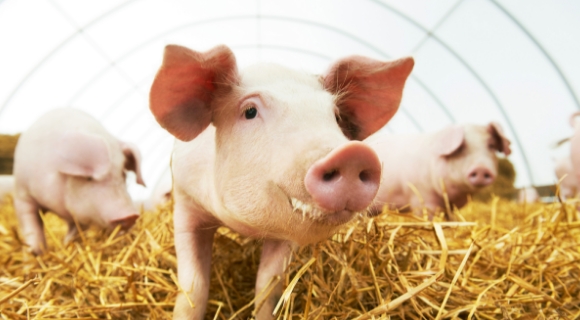
Red Tractor’s Pigs Sector Board met on 5th November 2025 for a constructive meeting in which we discussed and tackled some important issues for the pigs sector. As always there were contributions from everyone in the room including producers, processors, the NPA and UFU, and our retailer representative. We were also joined by Duncan Berkshire from the Pig Veterinary Society (PVS).

Animal welfare exposes

The Board discussed the increasing pressure on the pigs industry created by animal welfare activists, and the risks of further media exposes.

It was agreed that Red Tractor has an important role in upholding standards in British pig production and the reputation of the industry. The Board agreed that compliance with Red Tractor standards is the best defence against exposes and welcomed the work that Red Tractor is doing with the NPA and others to raise awareness of the need for compliance.

Red Tractor staff explained the process for dealing with reports of mistreatment of animals, following a proportionate, fair and consistent approach, first investigating and then ensuring standards are upheld. In many cases Red Tractor is able to rule out animal welfare abuses. Between mid-August and mid-October there were 12 reports of animal welfare concerns involving pig producers – three have resulted in suspensions, one of which lasted less than 24 hours.

Red Tractor is working with certification bodies and others to ensure resources and processes are in place to respond as quickly as possible in a scenario of multiple simultaneous suspensions. The Board understands the damaging impacts that the suspension of Red Tractor certification can have on animal welfare and businesses. Red Tractor always aims to work with producers to lift suspensions as quickly as possible while ensuring the confidence of customers.

Manual blunt force trauma

Duncan Berkshire from PVS and Chair of the Pig Health and Welfare Council presented to the Pigs Board on the complex legislative landscape surrounding the use of manual blunt force trauma. Conflicts between primary and tertiary legislation, together with a change in Defra’s definition of ‘emergency’ euthanasia, are creating confusion amongst producers. Having examined the legislation, the Pigs Sector Board agreed that overall the legislation requires pig producers to use mechanical methods of euthanasia, except in exceptional emergencies.

The Board discussed the implications and the need for Red Tractor’s requirements to ensure standards keep pace with legislation. It also recognised, in the context of animal welfare exposes, the need for Red Tractor to play a role in upholding the reputation of the industry by moving away from manual blunt force trauma.

As a result, the Board unanimously agreed to include guidance on acceptable methods of euthanasia in Red Tractor’s pigs standards. More details on this guidance will be shared with pigs members as soon as possible.

Enhanced Welfare Outdoor Bred

The Board reviewed the communications plan and proposed labelling for the new Enhanced Welfare Outdoor Bred module to be introduced for the pigs sector at the request of industry. Further details will be communicated to all members and stakeholders in December, with the opportunity to transition to the module from 31 January 2026.

Alternative farrowing

Further to previous discussions on the need for an enhanced welfare offer for indoor bred pigs, and ongoing stakeholder and media interest in farrowing, the Board agreed that the Pigs Technical Advisory Committee (TAC) should develop options for an industry approach to more flexible farrowing.  A proposal will be presented at the next Sector Board meeting.

Sector Strategy

As part of Red Tractor’s commitment to tangible improvements for farmers, in 2026 TACs, Sector Boards and technical teams will review all farm standards. The Pigs Board has developed a strategy for the pigs sector which prioritises ensuring ongoing market access, enhanced welfare, reduced audit burden and builds a more connected community. As part of the longer-term strategy there was a positive discussion about how the Pigs Board can support the industry on environmental issues, in particular water pollution, working with AHDB and NPA. More details will be published in December with opportunities for stakeholder feedback.

25-years of Red Tractor

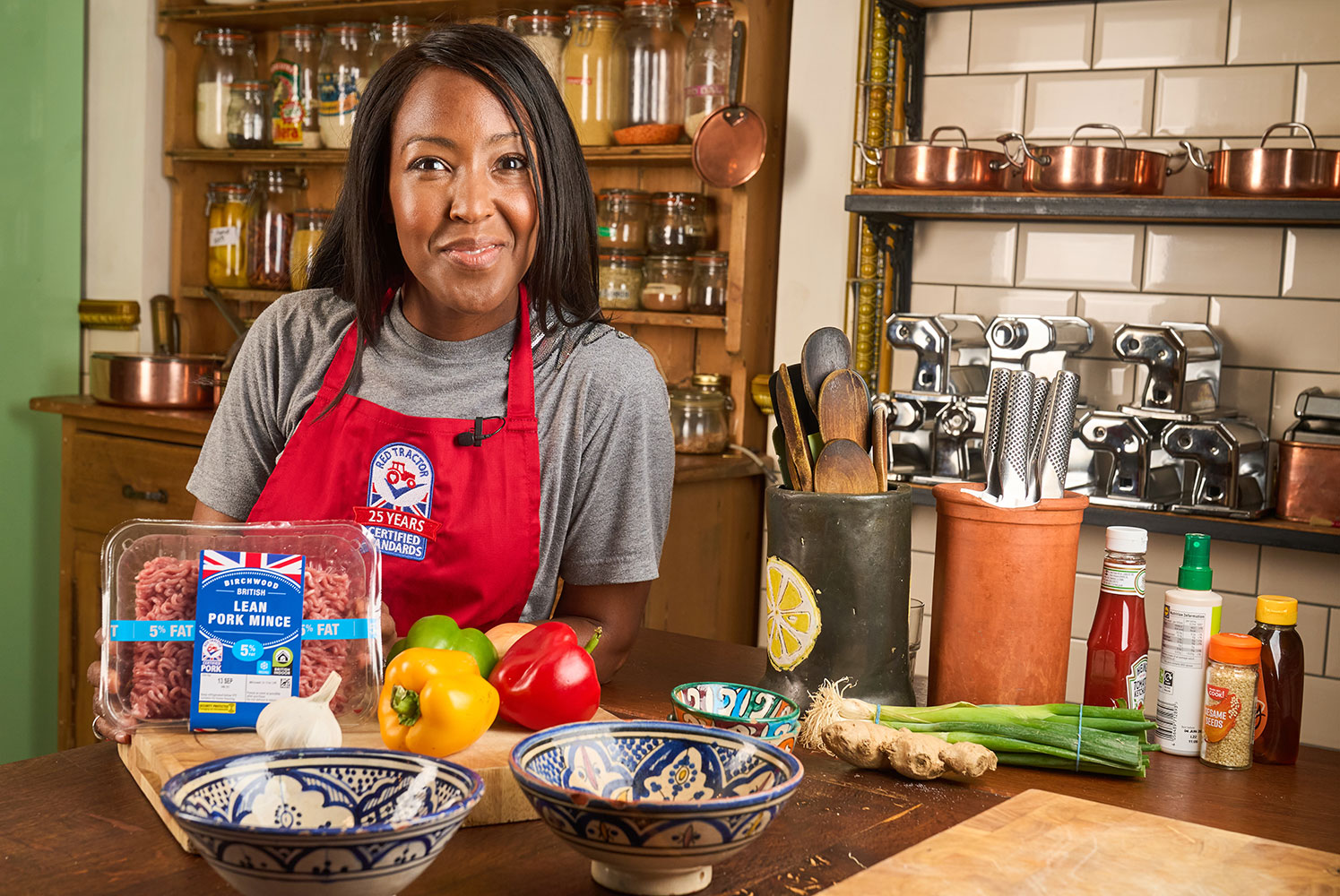
The meeting concluded with a round-up of Red Tractor’s marketing and PR campaign to raise awareness of the Red Tractor logo amongst shoppers. Communications included a collaboration with TV presenter, Angellica Bell.

As always, please do reach out to the Red Tractor team or a member of the Pigs Board if you have any questions on anything discussed during the meeting.

Kind Regards

Stewart Houston

Chair, Pigs Sector Board

Stewart Housten, Pigs Sector Chair

Members of the Pigs Sector Board

Stewart Houston – Chair

Grace O’Gorman – TAC Chair

Lizzie Wilson – NPA

Ash Gilman – Processor

William de Klein – Processor

Jack Davis – Retailer

Michael Putt – Pig Veterinary Society

Mark Haighton – AHDB Pork

Muhamed Maliki deputising for Heidi Decker Wojung – Processor

Pig Producer Reps (indoor and outdoor) – x 6 (including 1 x NPA rep and 1x UFU rep)*

*Names of producer reps are not published due to safety concerns

22 Oct 2025

Red Tractor launches ‘Recipes to Remember’ with TV’s Angellica Bell

Toad in the hole, corned beef hash, and bubble and squeak are among the classic kitchen British kitchen staples which have stood the test of time.

A poll of 2,000 adults revealed the top 30 nostalgic dishes people prepared in homes across the UK, including liver and onions (28 per cent), bread and butter pudding (33 per cent), and Welsh rarebit (26 per cent).

Other dishes making their way to the dinner table are home-made scotch eggs (24 per cent), suet dumplings (20 per cent), and Lancashire hot pot (19 per cent).

It also emerged 63 per cent confirmed the retro recipes they serve up to loved ones have been passed down to them through the generations, signifying the key role they still play in family mealtimes.

With 54 per cent learning them from their parents and 24 per cent from their grandparents.

In a bid to put traditional dishes to the test, children’s TV legend Angellica Bell teamed up with Red Tractor to host an intergenerational cook-off, featuring a selection of family recipes handed down through the generations.

Three families joined the Celebrity MasterChef winner and former CBBC presenter to recreate their favourite nostalgic dishes and explore why they are so important to them. 

Recipes included meatballs and spaghetti prepared by Nessie with her two daughters, Coco and Zaza, and son, Kaspar.

A hearty rhubarb crumble was created by Colette and her daughters, Amy and Chloe, and a delicious Chinese-style chicken noodle recipe was prepared by Tony and his son, Benjamin. 

The cook-along was planned by the food assurance scheme in honour of its 25-year anniversary, celebrating the hard work of British farmers and growers in meeting the high standards that ensure the safety and traceability of food produced in the UK.

Angellica Bell said: “I have great memories of cooking with my grandmother when I was a little girl and that’s why I believe spending quality time with loved ones in the kitchen is precious.

“It was fantastic to meet some amazing families and discuss the nostalgic dishes that have been handed down through generations in their households, hearing how important it is to them to keep those traditions alive.

“Creating recipes with ingredients that I know are safe, traceable, and British, was the perfect way to remind people about the importance of keeping this front of mind when shopping in supermarkets.”

Richard Cattell, spokesperson for Red Tractor, which has also created an interactive AI recipe generator tool to encourage budding chefs to create nostalgic recipes for their families said: “To mark this milestone anniversary we wanted to explore how nostalgia and cooking can really bring families together. 

“It was fascinating to find out which traditional British dishes have stood the test of time, as well as seeing the unique and personal touches families bring to those recipes in the modern day. 

“Angellica was the perfect host for the event – as well as it being 25 years since she first started as a children’s TV presenter, she is also passionate about cooking and encouraging children to get involved too. 

“We hope to inspire others to get together with loved ones and prepare their own nostalgic dishes.” 

The study found that over two thirds (68 per cent) of adults have used specific methods to try and keep traditional recipes alive.

For example, cooking their favourites at big family gatherings, writing recipes down in notebooks or cookbooks, or teaching their own children how to make nostalgic dishes.

Overall, 87 per cent agreed it’s important to keep traditional British recipes alive, according to the OnePoll.com data.

And it seems they are living up to this promise – with over a third (35 per cent) cooking classic dishes at least a few times every week.

A contributing factor to this may be the importance placed on buying British produce and supporting British farmers – 75 per cent confirmed they take this into account each time they shop for their family.

Richard Cattell added: “Nostalgic dishes may not be considered as trendy as they once were, but it doesn’t mean we should let important aspects of our heritage fade from the kitchen completely. 

“It’s heart warming and reassuring to see that so many families agree – and are keeping our nation’s favourite classic dishes alive by sharing recipes through the generations and creating lasting memories together in the kitchen.

“With a dash of nostalgia and a big dollop of comfort – we can keep homegrown produce and dishes at the heart of our family homes, ensuring the safety and traceability of ingredients while supporting British farmers.”

TOP 30 CLASSIC DISHES STILL BEING SERVED UP AT HOME

  1. Roast dinner (67 per cent)
  2. Spaghetti Bolognese (63 per cent)
  3. Bangers and mash (59 per cent)
  4. Fish and Chips (58 per cent)
  5. Cottage Pie (55 per cent)
  6. Shepherd’s Pie (52 per cent)
  7. Victoria Sponge Cake (45 per cent)
  8. Toad in the Hole (39 per cent)
  9. Bread and Butter Pudding (33 per cent)
  10. Corned Beef Hash (32 per cent)
  11. Ploughman’s Lunch (32 per cent)
  12. Rhubarb Crumble (32 per cent)
  13. Lemon Drizzle Cake (30 per cent)
  14. Bubble and Squeak (30 per cent)
  15. Liver and Onions (28 per cent)
  16. Welsh Rarebit (26 per cent)
  17. Scotch Eggs (24 per cent)
  18. Steak and Kidney Pie (21 per cent)
  19. Suet Dumplings (20 per cent)
  20. Eton Mess (19 per cent)
  21. Lancashire Hotpot (19 per cent)
  22. Treacle Sponge Pudding (17 per cent)
  23. Biryani (16 per cent)
  24. Jam Roly-Poly (16 per cent)
  25. Coronation Chicken (15 per cent)
  26. Cornish Pasty (traditional recipe) (15 per cent)
  27. Jollof rice (14 per cent)
  28. Pork pies (11 per cent)
  29. Spotted Dick (11 per cent)
  30. Oxtail Stew (10 per cent)

Watch the video to find out more!

16 Oct 2025

How does Red Tractor protect the logo? 

Recognised by 75% UK shoppers, the Red Tractor logo assures consumers that the food they buy meets rigorous standards in food safety, animal welfare and traceability. To preserve this trust, Red Tractor enforces strict rules around logo usage and use of our claim terminology (“RT”, “RTA”, “RT Assured”, “Red Tractor”, “Red Tractor Assured”) to protect our brand integrity. 

Why logo protection matters: When consumers see the Red Tractor logo, they expect the product to be British, fully traceable and produced to high standards. Any misuse of the logo risks undermining this trust and the reputation of British farming. 

Trademark protection: The Red Tractor logos (Red Tractor©, Red Tractor Assured©, Red Tractor Assurance©, Red Tractor Certified Standards©) are registered trademarks, meaning only licensed and approved users may access and use them. 

All logo designs on product packaging and menus must be submitted for approval prior to printing to the Red Tractor Supply Chain Assurance Team to ensure accurate logo use by our licensees.

Enforcement and accountability:  As part of our Traceability Challenge Programme, Red Tractor actively monitors logo usage and terminology claims (e.g. “Red Tractor”) and takes enforcement action when necessary. Misuse of the logo whether intentional or accidental can result in sanctions for the licensee and negatively impacts Red Tractor’s reputation.

A shared responsibility: Every Red Tractor licensee plays a role in safeguarding the logo. By using it accurately, licensees reinforce the high standards that define British farming and maintain consumer confidence in assured food. 

Red Tractor’s Senior Licensing Manager, Joanna King explains the label is more than just a logo, it’s a symbol of trust, integrity and world-leading standards in British food production. 

Strict usage rules: 

British only: Only food businesses licensed by Red Tractor are able to use our logos and make a Red Tractor claim. Our licensees range from the smallest entrepreneurial food producers and the largest processors and packers to the most iconic British household brands and global food service providers.  

Must be licensed: All Red Tractor licensees must be technically approved to hold a licence. This approval is critical to our whole chain assurance approach, ensuring the British supply chain is meeting the standards required at each key stage in the process. 

Wide-ranging criteria: Red Tractor has robust criteria and terms & conditions in place, through our licensing process and our traceability challenge programme. 

These ensure that claims, including logo use, on products, websites, menus, marketing materials, paperwork and in any communication to promote Red Tractor products are accurate and are only made on or is association with eligible products.  

29 Sep 2025

Red Tractor CEO, Jim Moseley to retire

Red Tractor Chief Executive, Jim Moseley has announced that he will retire from full-time employment in April 2026.

“After 50 years in the food and drink industry, and 9 years as Chief Executive of Red Tractor, now is the right time for me to take a step-back to enable more personal time,” Jim Moseley said. “I will leave Red Tractor in a strong position to support the future of British food and farming, with a Board, a Leadership Team and tremendous employees who have the skills, knowledge, experience and dedication to carry Red Tractor forward.

“I would like to take this opportunity to express my gratitude to the team at Red Tractor for their immense contribution and hard work. Assurance is not an easy occupation, but the team at Red Tractor deliver their roles with huge professionalism and extraordinary resilience. This team is one of the strongest I have had the pleasure of working with. Red Tractor’s recognition by the World Health Organisation as a ‘global exemplar of a voluntary assurance programme’ is testament to their abilities and the quality of the scheme.”

Alistair Mackintosh, Chair of Red Tractor said: “Jim has made an extraordinary contribution to Red Tractor and British food and farming. Consumer trust in British food is at record levels, as are the number of retailers, caterers and brands relying on Red Tractor assurance. The influence that Red Tractor has in securing markets and demand for British produce, should not be underestimated. Jim will leave an organisation which is highly motivated, financially sound and well governed. On behalf of Red Tractor’s Board of Directors, I’d like to thank Jim for his unrelenting support for British food production. I’m very grateful for Jim’s support as we continue to deliver real, tangible change for farmers, while recruiting a new Chief Executive.”

Watch an interview with Jim Moseley explaining his reasons for retirement

Jim Moseley explains his decision to retire from full time employment

Jim Moseley has worked in every aspect of food and drink, starting out in primary agriculture before moving into food manufacturing, responsible for some of the UK’s biggest food brands. He’s represented the industry at the highest level with governments and global bodies, as President of the Food and Drink Federation, Chair of the Provision Trade Federation, Member of Food Drink Europe and as an industry representative of various government groups including the Trade & Agriculture Commission. He became Chief Executive of Red Tractor in 2017, having previously served as its Chair for two years.

Jim will remain in post for the remainder of the 2025/26 financial year, enabling time for the recruitment of a new Chief Executive while Red Tractor continues to focus on its current priorities, including delivering the recommendations set out in the Farm Assurance Review. 

After retiring as Chief Executive of Red Tractor, Jim plans to focus on roles that will give him more time to focus on family and personal life. The process for recruiting a new Chief Executive will be shared in due course

22 Sep 2025

Shared Commitment, Shared Success: Red Tractor Backing Better Dairy Welfare

The latest review of the UK Dairy Cattle Welfare Strategy (2023–2028) shows real progress in cow health and wellbeing, driven by collaboration across the industry. The strategy sets six key goals: healthy feet, thriving cows, healthy udders, cow comfort, good nutrition, and positive welfare. Farmers, vets, researchers, processors, retailers, and assurance schemes are all contributing to these improvements.

Lameness, a costly but preventable problem, is being reduced through routine mobility scoring, while tighter control of Johne’s disease has nearly halved herd infection levels since 2015. Mastitis cases have fallen thanks to regular monitoring, and more cows are in good body condition with fewer lesions and swellings than a decade ago.

Red Tractor supports these efforts by translating welfare science into practical standards that can be applied on farm. With 98% of UK milk coming from Red Tractor-assured farms, this shared commitment is helping to drive real change. From mobility scoring at assessments to the adoption of the National Johne’s Management Plan (NJMP) into the standards, Red Tractor provides a consistent framework that ensures improvements are widespread rather than isolated.

As the strategy continues to 2028, farmers’ day-to-day dedication, backed by science-led innovation and practical standards, will remain central to future progress in cow welfare and sustainability. As Red Tractor evolves to meet changing industry demands we will look to see where our standards can support the strategy.

Jemma Holden, Red Tractor’s Dairy Technical Manager underlined Red Tractor’s role in bridging welfare science with practical standards. She said “Improving cow welfare is a shared commitment. Red Tractor’s role is to translate welfare science into practical, on-farm standards. By providing clear, consistent standards we’re helping the industry make meaningful, lasting progress in line with the Dairy Cattle Welfare Strategy. As industry demands evolve, we’ll continue to ensure our standards support that strategy.”

Find the 2025 review of progress report here: Dairy Cattle Welfare Strategy – A Review of Progress 2023-2025.

19 Sep 2025

Red Tractor labelled meat must be stunned before slaughter

All meat products carrying a Red Tractor logo or claim must be stunned before slaughter

Our requirements are clear and uncompromising. All livestock intended for Red Tractor labelled meat products, including those that are religiously slaughtered, must be effectively stunned before slaughter. This applies to every animal, without exception.

Animal welfare is at the heart of Red Tractor’s standards. We take our guidance from independent expert bodies including DEFRA, which sets the legislation on slaughter practices, and the Humane Slaughter Association, which publishes guidance and technical notes.

While some Red Tractor products may also carry additional labels such as Halal, organic, or other cultural or production claims, those schemes are managed by other organisations. What matters for shoppers is this: the Red Tractor logo will only appear on product which has met our criteria. Our criteria will always include the requirement that livestock is stunned before slaughter. Meat with a Red Tractor claim can be described as Halal too, but the animal must have been stunned prior to slaughter.

Our Traceability Challenge programme rigorously tests supply chains to ensure integrity from farm to pack. It means shoppers can have complete confidence that anything carrying the Red Tractor logo is exactly what it claims to be.

19 Aug 2025

Upholding Red Tractor Standards  

At the heart of British farming practice is a shared commitment to integrity, responsibility, and high standards. 


Every day, thousands of Red Tractor assured sites and their teams go above and beyond, caring for their animals, producing safe food, and safeguarding the reputation of UK agriculture.  

While audits to Red Tractor Standards provide a snapshot in time, assurance is about continuous care. Farmers make a promise to uphold our standards every day, not just on the day of the assessment.   

To hold farmers to this promise, we may make more frequent and unannounced visits to those businesses which require a closer monitoring of ability to maintain compliance. It may be that we also ask for more third party engagement on the farm, such as vet visits to provide independent confirmation of actions.

We also provide an anonymous whistle-blowing service and actively encourage anyone with concerns to raise these as soon as possible so that we can investigate. 

Dealing with concerns

When concerns arise, we act decisively, proportionately and consistently, investigating thoroughly, requiring corrective measures, and monitoring ongoing compliance. Farms that cannot meet out expectations cannot remain assured.

In more serious cases, such as where serious neglect or mistreatment of animals is reported, a farm’s certification can be suspended, pending investigation. Certification is only reinstated if all parties are completely satisfied our standards are met.

We work with the independent certification body to review the evidence, verify any claims of non-compliance – correcting misinformation where necessary – and find a resolution that maintains customer confidence, as quickly as possible.

When footage or allegations are received, Red Tractor will:

  • Review and triage evidence
  • Consult experts and vets, if needed
  • Conduct a spot check, where necessary
  • Seek to verify all evidence
  • Call out inaccurate or unfair claims against a member
  • Suspend assurance only when a clear breach of our standards is confirmed

Investigations

Investigations may include:

  • Expert assessments and veterinary input
  • Implementing of special conditions, such as: additional training or reassignment, veterinary inspections, unannounced spot checks, CCTV installation for ongoing monitoring.

The process may take days or weeks depending on the complexity, but cooperation and transparency accelerate resolution.

Upholding values

We understand how important the reputation of British agriculture is to the entire supply chain, particularly consumers, retailers and the farming community. Red Tractor members take their responsibility seriously and are proud to uphold the values our scheme represents.

The Red Tractor logo stands for something real: food produced responsibly, to high standards, by people who care.

05 Aug 2025

The Future of Assurance: Setting the path for improvement 

Red Tractor has committed to delivering improvements including streamlining assessments and reducing audit burden.

Simon Thorpe, Senior Technical Manager at Red Tractor explains the work already underway to ensure meaningful change for farmers and growers.

The last four months have been a busy time for Red Tractor’s operations team. The entire team is working hard to put in place the building blocks to enable us to improve the value and experience of Red Tractor assurance for farmers and growers.  We understand the eagerness of many members to see change happen as soon as possible.

While we’ve already been rolling out many operational changes, such as improvements to the Red Tractor Member Portal and communications, we’ve also been taking the time to ensure we’re set up to deliver meaningful changes to requirements and assessments that provide the improvements you’ve asked for.  Some examples of the work we’ve been doing:

Effective decision-making
As a multi-stakeholder, not-for-profit organisation, Red Tractor’s operations are directed and informed by a wide range of experts sitting on Sector Boards, Technical Advisory Committees and the Board of Directors. These groups include representatives from each farming sector, and importantly the entire supply chain, helping to ensure that Red Tractor delivers value to all.

Throughout the past 24 years, Red Tractor has worked hard to balance the needs and views of all stakeholders including retailers, processors, farmers and governments. Achieving consensus between these often-opposing perspectives can, however, be challenging. As a result, we’ve been working hard to instil a spirit of collaboration, trust and shared values within these groups, to ensure they function effectively so that all perspectives are considered.

After thorough consultation with those sitting on Sector Boards, new Terms of Reference have been developed for each group detailing the roles and expectations of representatives. The Terms of Reference are now close to final and will be published over the summer. As we move forward to identify and deliver improvements, this common understanding will be essential to establishing consensus and taking account of impacts of changes throughout the supply chain.

Clear ground rules for standards setting 
As we identify potential changes to Red Tractor’s requirements, we’re mindful that there needs to be consistency and alignment on what these changes aim to achieve.  A new policy for the development of Red Tractor Standards has been developed to guide Red Tractor’s approach to all future standards and operational reviews. This policy includes a clear vision and purpose for Red Tractor together with principles which will act as our north star for standards setting.

These include principles of clarity, practicality and objectivity of standards and assessment, together with a key focus on British provenance, food safety and animal welfare. The policy will be published on our website and available to all stakeholders as we work together to identify potential improvements.

Developing sector-specific strategies
Recognising that different farming sectors require different approaches, we’re developing sector-specific strategies that identify the priorities and objectives for that sector over the coming months and years. These strategies will take onboard feedback from stakeholders and set a path for delivering changes.

While all sectors will take stock of current scheme content and approach, focus and priorities will differ by sector. We can already see some sectors focusing on streamlining standards while others are placing greater emphasis on integrating technology or seeking to reduce overall audit burden.

Each Sector Board will take into account the need for meaningful consultation with opportunities for members to input into decision-making.

Initial discussions about these strategies took place during the July Sector Board meetings (find out more in the Sector Board summaries). Taking onboard initial feedback, we’ll be sharing more detailed strategies for consideration by Sector Boards in September, after which we hope to be able to share more details on the direction of travel within each sector.

As expressed in our response to the Farm Assurance Review, we’re committed to making change happen while prioritising key issues, allowing time for consultation and collaboration, and balancing speed with rigour.

Keep up to date with our progress in delivering our commitments at redtractor.org.uk/FAR

05 Aug 2025

Backing British beef: Retailers come out in full support of Red Tractor

With speculation around the UK trade negotiations, British retailers are standing firm in their commitments to sourcing Red Tractor assured British beef.

Lidl GB, Waitrose, Co-op, Aldi and Tesco have all reaffirmed their policies for sourcing British beef assured by Red Tractor. These commitments are a welcome vote of confidence in the dedication, quality, and high standards of our beef-producing members.

Speaking to the Press Association, Giles Hurley, chief executive of Aldi UK and Ireland said: “…100 per cent of our everyday fresh beef, pork and poultry is sourced from British farms… We won’t lower our standards even if others do. This isn’t just about food safety. It’s about protecting British farmers and doing the right thing for our customers.”

Waitrose reported a surge in demand for British-grown food with sales of British beef up 193% compared to this time last year.

Jake Pickering, Head of Agriculture, Aquaculture and Fisheries at Waitrose & Partners, said: “Our customers are telling us they want to support UK producers, and we’re proud to be a retailer that champions them every step of the way.”

Richard Bourns, Lidl GB chief commercial officer, who wrote to Red Tractor confirming the retailers’ confidence in Red Tractor assurance, said: “British farming is recognised globally for its high standards of animal welfare, food safety and environmental stewardship. At Lidl, we know these values matter to our customers, which is why we proudly support and champion British agriculture.”

These commitments demonstrate a strong, united front among leading UK retailers and send a powerful message of confidence in the integrity of UK farming and the assurance schemes that underpin it.

Speaking at the time of the Lidl GB commitment, Red Tractor Chair, Alistair Mackintosh, called on others to follow suit.

Consumer demand for British produce was also confirmed by Red Tractor’s latest Trust in Food Index. The research, commissioned to reinforce calls for retailers and the government to back British, revealed that 94% of people trust food produced in the UK. For food from the US, trust drops to just a third.

Consumers have made it clear: they value food that reflects British values of local, safe, and responsibly produced. This is supported by three quarters of main shoppers saying they recognise the Red Tractor logo and see it as an independent marque they can trust. Undermining these expectations risks eroding UK consumers’ confidence in food safety and standards that British farmers and assurance bodies have worked so hard to earn.

We thank these retailers for leading by example and demonstrating their continued support for British beef. We will keep pressing for others to follow suit because, we know that supporting British farming is not only good for business – it is essential for trust in our food system.


16 Jul 2025

Reflections on the UK Food Strategy 

Jim Mosely, CEO Red Tractor 

16 July 2025 

Yesterday, the UK Government published its Food Strategy for England, focusing on healthier and more affordable food, good growth, sustainable and resilient supply and vibrant food cultures. 

The strategy provides a framework for policy development, but there will be much work to do in understanding how it can be delivered.  

At Red Tractor, we’re very supportive of a comprehensive food strategy that supports local food systems, domestic production and upholds British standards. We welcome all opportunities to work with the Government to understand the role of assurance in delivering the strategy.  

Just last Thursday, I had the opportunity to hear from the Minister for Food Security and Rural Affairs, Daniel Zeichner and to extend this offer of support and collaboration. I joined a small group of farmers, growers, processors and branded food manufacturers at a dinner hosted by Mills & Reeve – one of the country’s largest legal firms in terms of food, beverage and agriculture. During the meeting Daniel Zeichner spoke on subjects as varied as gene editing, planning decisions and the Food Strategy. 

I took the opportunity to impress upon the Minister both the importance and the potential of the UK’s agri-food industry. Boasting some of the highest standards of food safety and animal welfare in the world, our industry is one to be proud of. With the right tools it can be a major contributor to Government’s aims of increased food security and growth through exports.  

However, Government needs to give the industry the respect and trust that it deserves and listen to those stakeholders that can drive growth. Policies should be based on market opportunities and facts not on anti-farming opinions. Planning decisions should be taken at the highest level – ensuring national objectives are taken into account – and not by parish councils. Labelling and food choice should be driven by consumer research not activist pressure. I also talked of the value of assurance to the food chain and to Government – a message that was well received and that we must build on with this Administration.