Search

19 Feb 2026

Red Tractor launches new portal features to ease audit burden for farmers

Red Tractor has introduced three major improvements to its member portal, designed to reduce assessment preparation time, stress and paperwork burden for farmers and growers.

The updates allow members to take live, geo-stamped photos directly within the portal as compliance evidence, using their mobile phone.

Instead of manually recording tasks on paper, like cleaning the grain store or changing milk liners, the portal automatically captures location, date and time data, creating an instant record and demonstrating due diligence.

Making the portal work around how farms actually operate

Philippa Wiltshire, Director of Standards and Operations at Red Tractor says: “This addresses a genuine frustration farmers and growers have shared, which is maintaining paper records for routine tasks that could be evidenced far more efficiently.

“This is about making the portal work around how farms actually operate.”

Further improvements include a new shortlist function which flags ‘high impact’ documents for uploading prior to assessments, plus embedded links to third-party templates, such as Yellow Wellies’ health and safety resources.

Preparation time where it matters most

Mrs Wiltshire added: “To help reduce the time spent preparing for audits, we’ve worked with the certification bodies to identify which documents will have the biggest impact on a farmer’s physical assessment. These can be seen on the portal using a simple toggle button.”

Importantly, these changes will not affect access to farm data either by Red Tractor or the portal developer Map of Ag, Mrs Wiltshire assures.

“Farmers and growers’ control of data is crucial and remains at the forefront of any enhancements we make to the system.

“In addition, individuals retain full choice over whether and how they use these features.”

Integrating standards compliance into systems farmers already use

Beyond its own portal, Red Tractor is working with third-party software providers to integrate standards compliance into systems farmers already use.

New crops checklists developed with MeritAgCheck are due to launch imminently, and discussions are underway with other providers across the sectors, including Lely in dairy.

Jon Stewart, Director at MeritAgCheck says: “Having the Red Tractor requirements built directly into MeritAgCheck means farmers can capture the information once and use it for multiple purposes, including their farm assurance. The integration makes the process much smoother for our customers and ensures they stay audit-ready without extra admin, saving them time that they can re-invest into other activities.”

Mrs Wiltshire adds: “We want to work with any company whose reporting could overlap with what’s required for Red Tractor assessments. If we can reduce duplication by working with software already in use, then that’s progress too.”

These latest updates form part of a wide range of improvements Red Tractor is implementing in response to the Farm Assurance Review – from reducing audit burden, to communications and engagement and the use of practical digital tools.  

Guidance on using the new portal features, including ‘how to’ videos can be found here.
12 Feb 2026

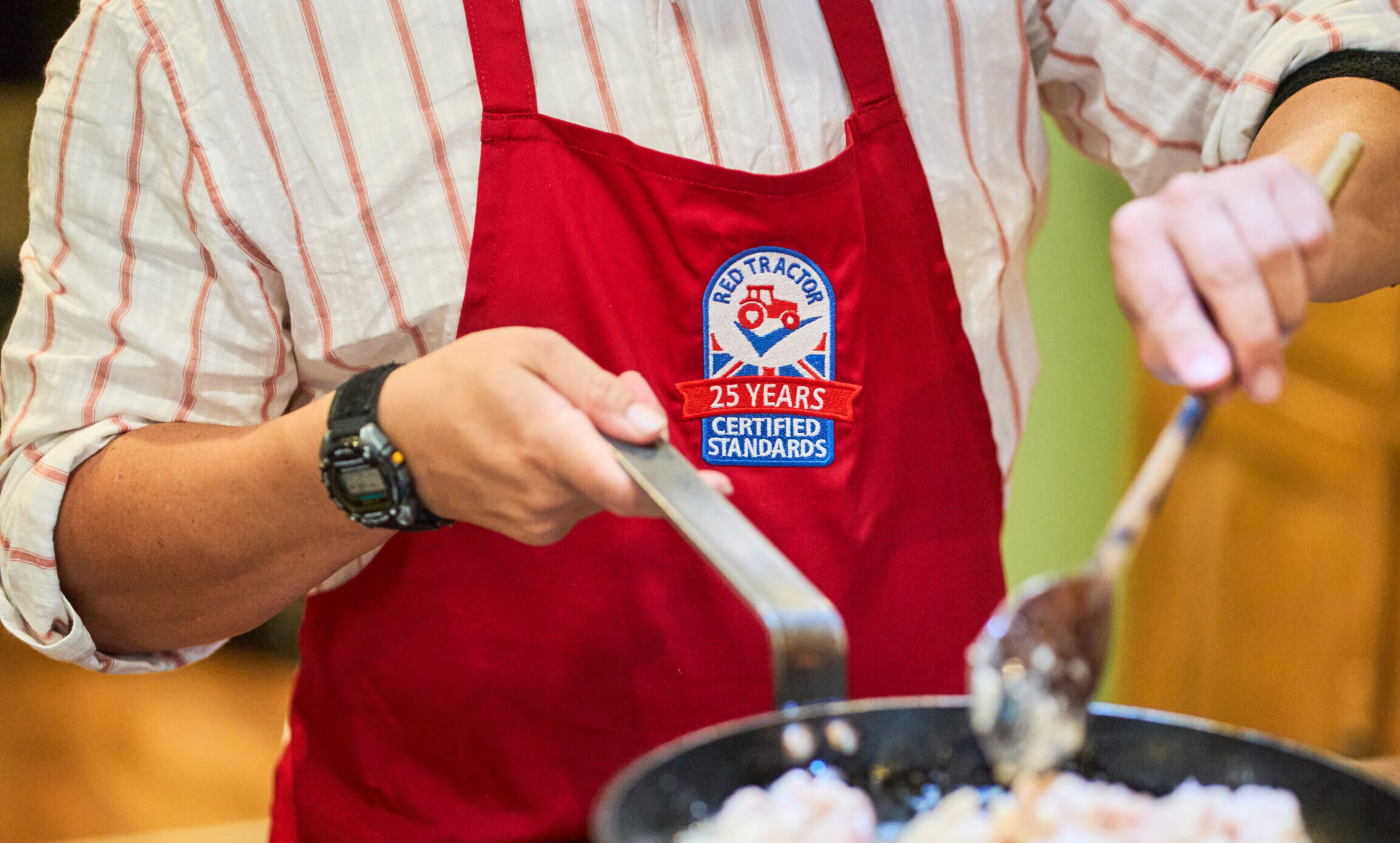
Red Tractor awareness reaches 75% following 25th anniversary campaign

Three quarters of UK adults now recognise the Red Tractor logo, according to new consumer research.

YouGov tracking data shows awareness of Red Tractor is at 75% – a 3% increase since January 2025 – putting the scheme marginally ahead of the Lion Mark for eggs at 72% for the first time.

Growing awareness and visibility

Director of Marketing and Commercial at Red Tractor, Richard Cattell, attributes the growing awareness to both the breadth of the scheme, visibility of the logo on packs and the impact of the ‘With you for 25 years’ consumer campaign, which launched in August and is set to reach 46.9 million people by March 2026.

“Red Tractor and other farm assurance schemes play an important role in helping shoppers make informed choices,” says Mr Cattell.

“For over 25 years the Red Tractor logo has been a symbol of safe, traceable and responsibly produced food, underpinned by the efforts of more than 40,000 farmers and growers working to deliver high standards year-round.

“Our new campaign not only celebrates British food but helps to remind consumers why the scheme is trusted by every major UK supermarket,” he adds.

Consistent, trusted marks in shoppers’ minds

“With ongoing questions about the clarity and value of food labelling, achieving this level of consumer recognition demonstrates that consistent, trusted marks can establish themselves in shoppers’ minds.”

Peter Chandley, Head of Quality and Food Safety at Weetabix says: “At Weetabix, sourcing responsibly is fundamental to everything we do. That’s why all the wheat we use from within a 50-mile radius of our mills is Red Tractor assured.

“Assurance plays a vital role in giving us confidence in the safety, traceability and compliance of our wheat supply chain, while also supporting high standards of British farming.

“It provides independent verification right back to the farm, helping us deliver consistently high-quality products to our consumers and reinforcing our commitment to working with trusted UK growers.”

Giving consumers confidence

Red Tractor CEO, Jim Moseley adds: “Given that we’ve only been advertising since the end of 2018 this is a fantastic result.

“Clear, trusted labelling is vital in building confidence in British food, and while assurance schemes cover different products and standards, they share the same goal of giving consumers confidence,” he says.

11 Feb 2026

Seeking support if you’re struggling with mental wellbeing

Red Tractor is supporting Yellow Wellies to encourage farmers to seek help

Farming is an industry where resilience is often worn as a badge of honour but it’s important to recognise the impact of poor mental wellbeing. Nobody should have to face their struggles alone. Each of us has a role to play in creating a healthier and more supportive environment to live and work in.

Red Tractor is supporting The Farm Safety Foundation (Yellow Wellies) to encourage farmers to seek help. The aim of the initiative is to raise awareness of mental health in the farming industry and to reduce the stigma around poor mental health.

Farmer wellbeing levels in decline

Research from the September 2025 Farm Safety and Wellbeing survey reveals a decline in mental wellbeing among British farmers over the age of 40. Wellbeing levels have dropped to the lowest point in four years. The data also highlights a disparity between the overall wellbeing within the farming community, which has been measured against the general population. The shows there is an urgent need for targeted support and intervention.

We cannot farm through mental health struggles

Red Tractor Chair, Alistair Mackintosh says: “We often talk about ‘farming through’ every challenge, be it weather, markets, or disease, but we cannot ‘farm through’ a mental health struggle.

“These latest findings are a sobering wake-up call. It is no longer enough to just work hard, we must work to look out for one another. Admitting things are tough isn’t a failure of character, it’s a necessary step to ensure our farms and our families have a future.

“We owe it to ourselves to speak up before the silence becomes too heavy to carry.”

If you’re struggling, talking to someone can make a big difference. Whether it’s family, friends, or a professional. Reaching out is a sign of strength.

Organisations there for you:

  • Farming Community Network (FCN) – Pastoral and practical support, helpline 7am-11pm every day. t: 03000 111 999
  • YANA Project – Confidential mental health support and counselling funding in Norfolk, Suffolk, and Worcestershire. t: 0300 323 0400
  • DPJ Foundation – Welsh mental health charity to support those in agriculture with mental health problems. t: 0800 587 4262
  • RABI – Financial support for farming families facing hardship. t: 0800 188 4444
  • Addington Fund – Housing and hardship grants for farming families in England and Wales. t: 01926 620135
  • RSABI (Scotland) – Practical, financial, and emotional support for those in Scottish agriculture. t: 0808 1234 555
  • Rural Support (NI) – Provides impartial support and guidance for the farming community in Northern Ireland. t: 0800 138 1678

Support is always available and you are never alone.

09 Feb 2026

Foot and Mouth Disease anniversary is a stark reminder of why assurance standards matter

As we mark the 25th anniversary of the Foot and Mouth Disease (FMD) outbreak, it’s an important moment to reflect on the lessons learnt and the ongoing significance of maintaining high standards to protect both food safety and our farming industry.

Alistair Mackintosh, Red Tractor Chair, shares his reflections on the devastating impact the FMD outbreak had on farming communities across the UK.

A year that changed farming

The 2001 outbreak reshaped the agricultural sector, and while some farms were not directly infected, all were impacted in some way.

Alistair recalls the challenges of managing his beef, sheep and arable farm while surrounded by FMD restrictions.

“At the time, people were talking about winners and losers, but there were no winners; everybody suffered in different ways,” he reflects.

The immediate focus of the outbreak was to stop the spread of the disease, and for those not infected, the key challenge was to restore trade.

Alistair remembers the restrictions on movement and trade that affected his farm operations: “I remember lambing with 800 sheep in one field, unable to move them. It was an absolute nightmare.”

The importance of border controls and British standards

Reflecting on those difficult times, Alistair emphasises the importance of maintaining high standards, particularly regarding the products imported into the UK.

“To prevent another outbreak, we must ensure our borders are properly controlled, and that imported products meet at least the same standards that British farmers adhere to,” he says.

In particular, Alistair highlights the growing concern among farmers about imported goods produced to lower standards. This, he warns, not only jeopardises the UK’s farming industry but also risks exposing consumers to subpar products.

Protecting farmers and consumers

The aftermath of the FMD outbreak reinforced the need for rigorous measures to protect UK farmers from imported diseases and to ensure consumers continue to have access to high-quality, safe food products.

As Alistair points out: “British farmers must always be vigilant in preventing another outbreak of this terrible disease, and it’s vital that government continues to protect our borders from illegal meat coming into the UK.”

This has never been more important, especially as the food supply chain becomes increasingly global.

Proper enforcement of border controls and maintaining high standards for imported products are essential for safeguarding both the industry and public health.

How Red Tractor contributes to rebuilding trust in British produce

The Foot and Mouth Disease outbreak of 2001 also underscored the need to rebuild trust in British food. Since then, assurance bodies like Red Tractor have played an important role in restoring consumer confidence.

“Farmers in the UK are committed to producing high-quality, affordable food. Red Tractor certification helps prove that commitment,” Alistair explains.

Independent auditors inspect farms every 12-18 months to ensure that they meet rigorous standards for animal welfare, food safety, and environmental responsibility.

Alistair believes that trust is built on transparency and proof, which is exactly what Red Tractor offers.

“It’s not enough to just tell people that we produce safe, sustainable food. We have to show it and that’s what Red Tractor’s assurance scheme is all about.”

Moving forward: maintaining robust standards

As the farming industry continues to evolve, Alistair stresses the importance of ongoing review and refinement of assurance standards.

“The FMD outbreak serves as a reminder of the need for robust, regularly reviewed standards to ensure consumer and retailer trust in British produce,” he adds.

The current review of all assurance standards within Red Tractor is an opportunity for farmers to engage and contribute to the ongoing development of the system.

As Alistair points out, “Farmers must have a voice in how standards evolve, ensuring that they align with the changing needs of the industry.”

At Red Tractor, our mission remains focused on safeguarding the reputation of British produce, supporting our farmers, and protecting consumers.

06 Feb 2026

Why fertiliser security matters and how to get it right

Growers are reminded to be vigilant when purchasing and storing large amounts of fertiliser to prevent it from falling into the wrong hands.

Superintendent Steve Fosher, Head of the National Counter Terrorism Security Office (NaCTSO), says: “Regardless of how much fertiliser you store, it is important you consider measures to prevent it from being stolen and misused by potential terrorists as the threat level to the UK remains at Substantial – An Attack is Likely.’

We must all do our bit to prevent fertiliser from being stolen. Whilst there is no such thing as absolute security, there are simple measures that can significantly reduce the likelihood of theft.

Storing fertiliser in an enclosed secure building or covering fertiliser with a tarpaulin in an open-sided barn may seem basic but can be effective.

Red Tractor and NaCTSO have put together a ‘Fertiliser Security Five Point Plan’:

Fertiliser Security Five Point Plan

  1. Wherever possible use a Fertiliser Industry Assurance Scheme (FIAS) approved supplier.
  2. Wherever possible keep in a secure area, such as a building or sheeted away from public view.
  3. Carry out regular stock checks and report any loss to the police immediately (call 101).
  4. Avoid leaving fertiliser in a field overnight – never leave fertiliser in a field for a long period of time.
  5. Remember it is illegal to sell ammonium nitrate without the correct documentation.

This plan highlights five key areas for farmers and growers to follow when using and storing nitrogen based fertilisers.

Balanced mix of security measures

For practical, cost effective security advice, click here to visit the National Counter Terrorism Security Office. The website provides practical guidance about securing fertiliser with a range of security measures that can be tailored to individual farming needs. It is recommended that farms adopt a balanced mix of integrated security measures incorporating a combination of both physical security and supporting procedures.

We all have a role to play

By following the advice and remaining security-conscious, farmers can prevent fertiliser from being stolen, which causes a financial loss to farmers and growers, but ultimately restricts the availability of nitrate based fertilisers for use by terrorist groups within the UK.

We all have a role to play to help prevent terrorism, if you think someone is acting suspiciously around a farm, contact the local Police or the Anti-Terrorist hotline: 0800 789 321 or online at: ACT: Report suspicious activity.

In an emergency, always call 999.

28 Jan 2026

Red Tractor launches Portal-First approach for Safe Haven Members

Red Tractor is modernising its Safe Haven assurance process by introducing a requirement for all Safe Haven members to use our online portal to upload their records. This update reflects our commitment to making assurance simpler, faster, and less disruptive day-to-day farm operations.

With most Safe Haven compliance requirements being record-based, the online portal allows assessors to review documents in advance, focusing on only the essential on-farm checks. This means visits will be quicker, more efficient, and less intrusive, saving farmers valuable time.

The move to the portal marks a significant step in Red Tractor’s ongoing efforts to streamline compliance, modernise assurance, and give farmers greater control over their time.

Benefits for farmers

  • Quicker assessments: Documents are reviewed in advance, so assessors spend less time on site.
  • Focused time on farm: Assessors can concentrate on the physical aspects of your farm.
  • Less disruption: Save valuable time and reduce paperwork stress.

Sam Trevey, Fresh Produce Technical Manager said:

“Growers have been clear that time spent on paperwork during assessments is a real frustration. Moving document checks online ahead of the visit is a practical step that makes the assurance process work better for our members. It allows assessors to spend their time on farm focusing on the more practical elements of the assessment, while giving growers greater flexibility and less disruption.”

Safe, easy, and supported

The portal provides a secure, central place to store documents, allowing farmers to prepare for assessment at a time that best suits their business. For Safe Haven members, where farms are often in remote locations and requirements are primarily records-based, this approach will help to manage logistical constraints while ensuring the assessment process maintains the same high standards.

By making document submission easier and on-farm assessments faster, this is an important step in delivering a modern, efficient assurance system that works for farmers.

For Red Tractor’s six core farming sector standards, using the portal is optional. While using the portal can reduce the on-farm assessment time looking at paperwork in all sectors, it is for members to choose how to provide assessors with the required information.

27 Jan 2026

Red Tractor Board Update – January 2026

The Red Tractor Board of Directors met on 23 January 2026. The meeting was an opportunity to review initial proposals for objectives in the next financial year, from 1 April 2026, as well as discussing ongoing work and challenges. It was an upbeat meeting, reflecting the positive steps forward and much still to do.  

CEO recruitment

I shared an update on the recruitment of the next CEO following Jim’s planned retirement from the organisation at the end of April. The recruitment consultancy, Berwick and Partners, has had a positive response to the advert and is now in the process of identifying a short list to be shared with the Nominations Committee. The Board agreed to progress with the recruitment process as published just before Christmas.  

Standards reviews

The Board received an update from the Standards Committee meeting where responses to the request for feedback on sector priorities were discussed in detail. Media and stakeholder commentary on the publication of the priorities has been positive, with most welcoming and encouraging the opportunity to feedback. However, the level of engagement – particularly in poultry, pigs and fresh produce – has been lower than expected. Red Tractor’s communications team will continue to promote opportunities for feedback until 1 February.  

Animal welfare

The Board also debated and discussed how Red Tractor can support the industry and uphold its reputations in the likelihood of an increased number of animal welfare exposes in 2026. The Board agreed that increasing year-round compliance with Red Tractor Standards, focusing on culture and human-animal interactions, is an essential component of safeguarding animal welfare and upholding the standards of UK livestock farming. Enhanced training, CCTV and working with industry groups were all discussed. This topic is likely to remain a live and evolving discussion in livestock sector boards, particularly those with intensive production.  

Collaboration with other assurance schemes

The CEO provided an update on the second meeting of assurance schemes, initiated by Red Tractor in 2025, which took place in Edinburgh on 16 January. It was reassuring to hear the shared focus across schemes on reducing audit burden. This forum will provide an essential ‘check’ on cross-scheme implications of changes to standards and assessment processes as many schemes look to review these in 2026.  

2026/27 Planning

Red Tractor’s leadership team shared their initial proposals for objectives and priority areas of work to be delivered in 2026/27. These are set within an internal context of a standards review process, a new CEO and embedding new ways of working within the organisation. They also take account of increased import competition, activist campaigns, government consultations, geopolitical impacts on international trade and food inflation.  

The Board agreed the importance of balancing the requirements of all stakeholders – shoppers, farmers and growers, government, retailers, caterers and brands – in developing this strategy. This includes the need to recognise the importance of out of home and food service opportunities from recommendations in the Farm Profitability Review.  

We also discussed how Red Tractor could encourage feelings of pride in more challenging sectors, including with arable farmers.  

The proposed overarching aims include an ongoing commitment to deliver the sentiment and aims of the Farm Assurance Review; upholding Red Tractor and industry’s reputation; developing partnerships and pride with all stakeholders; and utilising Red Tractor as a competitive advantage at home and abroad.  

These aims are supported by high level and more detailed objectives which Directors have been asked to review ahead of further discussions in March.  

Next steps

Red Tractor Sector Boards, which include representatives from across the supply chain in each sector, will meet in February to discuss feedback on the priorities that they identified for their sectors and the Board’s request to consider water and air quality challenges within their sectors. The sector-specific Technical Advisory Committees continue to develop the draft standards revisions, which we will consult on later this year. 

Kind regards, 
Alistair Macintosh, Red Tractor Chair 

Red Tractor Board members 

  • John Pain – Vice Chair 
  • David Exwood – Industry Director, Farmers Unions 
  • Will Jackson – Industry Director, AHDB (covered for by Ken Boyns) 
  • Dean Holroyd – Industry Director, BMPA 
  • Natalie Smith – Industry Director, BRC 
  • Chris Goodwin – Independent Director, Finance
  • James Russell – Independent Director, Vet 
  • David Neilson – Independent Director, BPC (absent from this meeting) 
  • John Dracup – Beef & Lamb Sector Chair 
  • Julian Sturdy – Combinable Crops and Sugar Beet Sector Chair 
  • Tim Lock – Dairy Sector Chair 
  • Veryan Bliss – Fresh Produce Sector Chair 
  • Stewart Houston CBE, FRAgS – Pig Sector Chair 
  • Nick Major – Poultry Sector Chair 
  • Jim Moseley – Chief Executive 

27 Jan 2026

Help shape the future of Red Tractor

We’ve partnered with Grounded Research to improve our understanding of farmers and consumers  

Red Tractor is pleased to have partnered with independent supply chain insight specialist Grounded Research to deepen our understanding of farmer and consumer perceptions as we work to strengthen confidence in the UK food system. 

The collaboration brings together Red Tractor’s role as the UK’s largest and most recognised food assurance scheme with Grounded Research’s experience in delivering research across food and agriculture. 

Strengthening confidence in the UK food system

As an initial step, Red Tractor members have been sent emails from Grounded Research requesting feedback about their experiences of farm assurance. All results will be aggregated and anonymised unless permission has been given to share quotes by the member. The results will inform a programme of improvements to Red Tractor’s standards, operations and communications.  

There will also be an opportunity for farmers and growers to share feedback on the experiences following their Red Tractor assessment.

If you’re a Red Tractor member and can’t find an email from Grounded Research, please email hello@groundedresearch.co.uk with your membership number and they will resend the email.

About Grounded Research

Grounded Research is an independent research agency specialising in food, farming and environmental issues. The organisation is known and trusted for delivering robust, impartial research that reflects the realities of the agri-food system, working across the supply chain to ensure evidence is robust, representative and accurate.

Combining qualitative and quantitative approaches, gathers insight from farmers, businesses and consumers to explore complex and often sensitive issues. Findings are carefully analysed and translated into clear, practical outputs that support informed decision-making and continuous improvement across the sector.

For Red Tractor farmers and growers, this independence and specialist knowledge ensures that perspectives from those directly affected by assurance are captured accurately, understood, treated with care, and represented fairly, providing a trusted evidence base to inform future development.

“Grounded Research’s role is to design and deliver independent research that accurately reflects the experiences and perspectives of Red Tractor members. Within this research programme, our focus is on ensuring that evidence is gathered systematically, analysed objectively and reported without advocacy or agenda. By doing so, we aim to support better research for farmers and a stronger evidence base for Red Tractor industry to make informed decisions on behalf of members for a stronger assurance scheme for UK agriculture.” Clare Otridge, Director of Grounded Research  

Look out for an email from Red Tractor with a link to share feedback in the week following your assessment.

22 Jan 2026

Strengthening food safety through industry collaboration

Working together in the leafy salads sector 

Food safety is at its strongest when the whole supply chain works together. Over the past two years, collaboration across the salads industry has played a vital role in shaping new standards designed to strengthen food safety, build confidence, and deliver consistent standards for growers and customers alike.

A shared response to a shared challenge

Following the 2024 outbreak of Shiga toxin-producing E. coli (STEC) linked to supermarket sandwiches, the salads sector came together with renewed focus on food safety. In response, industry partners have worked collectively with Red Tractor to strengthen practices at grower level, including enhanced food safety training and a comprehensive review of existing guidance.

This work was informed by expertise and insight from across the supply chain, growers, retailers, trade bodies and technical specialists ensuring that lessons learned translated into practical improvements on farm. 

Industry-led momentum for change 

With strong retailer backing for the updated Microbiological Guidance for Growers (MGG), the British Leafy Salads Association (BLSA) and the Chilled Foods Association (CFA) approached Red Tractor in early 2025. Their request was clear: develop a dedicated leafy salads module that could provide a consistent, credible and industry-wide approach to food safety assurance. 

The shared ambition behind this was to: 

  • Raise the bar on food safety at grower level 
  • Demonstrate robust, trusted standards to customers 
  • Reduce the need for multiple, individual customer audits 

Developing standards, together 

In response, and led by Barbara Bray MBE, Red Tractor brought together a specialist working group made up of respected experts from across the supply chain. This collaborative group combined scientific expertise with direct grower experience to develop a set of proposed standards that are: 

  • Science-based, reflecting the latest evidence and guidance 
  • Practical and achievable for growers 
  • Grounded in real farming and growing conditions 

Speaking at the recent BLSA food safety workshop, Red Tractor Fresh Produce Technical Manager Sam Trevey said, “This work demonstrates the power of industry collaboration. By aligning expertise and sharing responsibility across the supply chain, we’re proposing standards that balance robust food safety with real-world practicality, shaped by those who know the sector best.” 

Members voices matter

The Red Tractor Fresh Produce Technical Advisory Committee is currently consulting on enhanced food safety standards for leafy salads growers.

The draft standards are now open for wider feedback, and further grower input will help us to shape the final outcome. Grower insights will help ensure the standards are practical, proportionate and work on farm.

Please submit feedback by Friday 13 February 2026.

19 Jan 2026

Talking technology at Oxford Farming Conference 2026

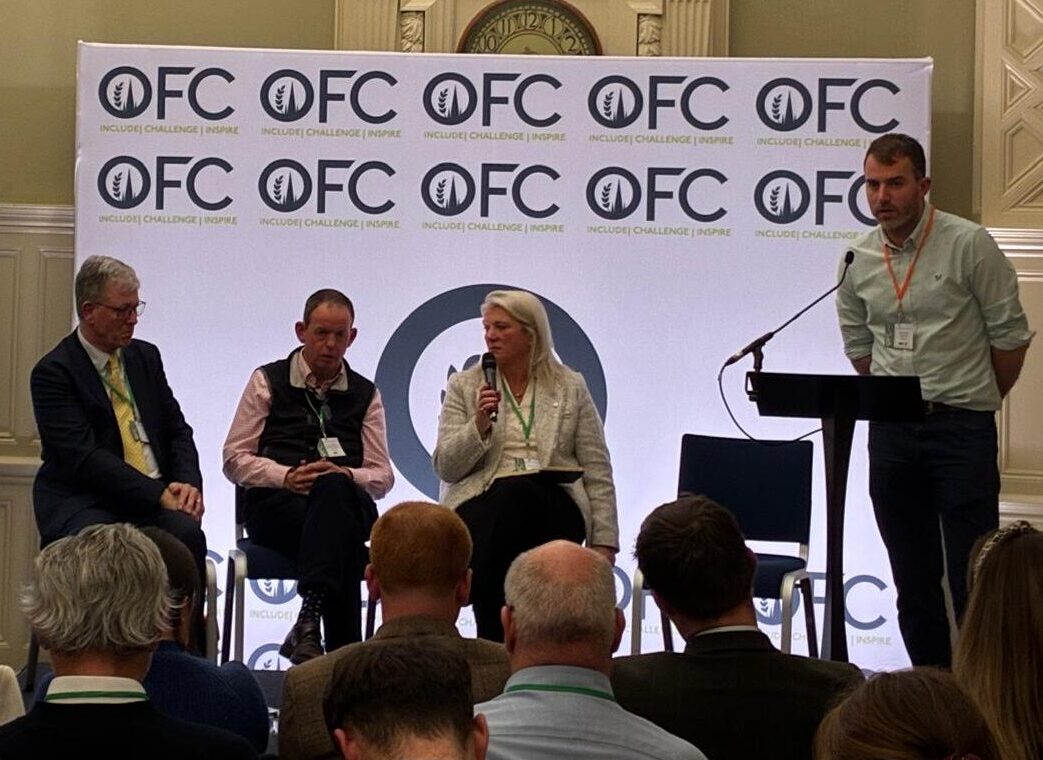
We were proud to support Map of Ag at their fringe event during the Oxford Farming Conference (OFC), where the industry gathered to consider how farm assurance schemes can use technology to cut down on paperwork and improve outcomes at farm level.

Red Tractor’s Philippa Wiltshire, Director of Operations & Standards, showcased the impact and functionality of the Red Tractor Portal, as well as offering a clear reminder of why the scheme exists. She outlined the organisation’s digital journey, from the 2019 launch of the portal through to the acceleration brought about by the COVID-19 pandemic.

An efficient tool for members

Philippa outlined the work that has been done to reduce audit burden and duplication for members, including work with the Tesco Sustainable Dairy Group (TSDG) and the use of AI to enable remote poultry assessments. Philippa explained that Red Tractor is now focusing on shifting the portal from an online filing cabinet to an efficient tool for members, with the mention of upcoming developments.

She also reflected on key learnings and challenges, such as connectivity issues for members, varied use of technology across farms/sectors, and differing levels of digital confidence. Philippa also hinted at the future, including standards review and sector board priorities over the coming months.

A wide range of perspectives

The session featured a range of perspectives, including insights from Phil Pearson (Red Tractor Fresh Produce Sector Board Member) and David Christensen (Arla dairy farmer). The panel explored how technology is actively shaping the future of farming, moving from theory to practical, on-farm solutions that benefit both the producer and the consumer.

Driving the industry forward

The overarching themes of OFC 2026 (Resilience, Working Together, Driving Change, and Embracing Data) resonated throughout the discussion. As the industry faces challenges such as climate goals and economic pressures, the message from the conference was clear: an open mindset and a willingness to embrace digital transformation are crucial for a sustainable and profitable farming future.