Search

02 Mar 2026

Support for farming communities in Northern Ireland

Red Tractor is proud to promote Rural Support NI’s campaign to raise funds to support farmers and their families in Northern Ireland.

A lifeline for those in need

The one-day fundraising challenge, ‘Spring Forward Give Back’ takes place on 7 March. The charity is hoping at least 100 people or businesses will raise £1,000 each on the day. The collective target of £100,000 will enable Rural Support to support those in the farming industry at a time of growing pressure and uncertainty.

Demand for Rural Support’s services continue to grow rapidly. All funds raised will go towards helping provide practical, financial and emotional support, which will act as a vital lifeline for those in need.

A real and lasting difference

Alistair Mackintosh, Chair of Red Tractor, says: “We’re pleased to stand with the farming community in Northern Ireland. The funds raised by Rural Support NI will make a real and lasting difference to those facing financial stress, emotional pressure and uncertainty. It’s a fantastic initiative and Red Tractor encourages local people and businesses to get involved.”

There are many ways to get involved, from taking on a personal challenge or rallying friends and family to raise funds in the lead-up to 7 March.

Access support from farming charities across the UK:

  • Farming Community Network (FCN) – Pastoral and practical support, helpline 7am-11pm every day. t: 03000 111 999
  • YANA Project – Confidential mental health support and counselling funding in Norfolk, Suffolk, and Worcestershire. t: 0300 323 0400
  • DPJ Foundation – Welsh mental health charity to support those in agriculture with mental health problems. t: 0800 587 4262
  • RABI – Financial support for farming families facing hardship. t: 0800 188 4444
  • Addington Fund – Housing and hardship grants for farming families in England and Wales. t: 01926 620135
  • RSABI (Scotland) – Practical, financial, and emotional support for those in Scottish agriculture. t: 0808 1234 555
  • Rural Support (NI) – Provides impartial support and guidance for the farming community in Northern Ireland. t: 0800 138 1678

02 Mar 2026

Broiler growers invited to support new research on AI technology and farm assurance

Red Tractor is pleased to highlight an honours research project being conducted by a final-year Veterinary Bioscience student at Harper Adams University, exploring how emerging technologies could support the future of farm assurance. The research will inform the upcoming review of the Red Tractor Poultry Standards and the scheme’s approach to how new technologies may support farm assurance in future.

AI technology to support auditors

Daisy Cooper’s dissertation aims to understand how broiler farmers feel about current audit processes, as well as their views on using artificial intelligence (AI) camera systems to complement assurance audits. The project focuses specifically on how data from AI technologies could support auditors – not replace them – to provide continuous, objective insights. Daisy spent her Harper Adams placement year working with the Red Tractor Standards Team.

To gather real-world perspectives, Daisy is inviting UK broiler farmers and anyone working with broiler chickens (aged 18+) to complete a short, anonymous survey. The questionnaire takes around 10 minutes and offers producers the chance to share honest feedback on farm audits, technology use, and any concerns or opportunities they see.

Your chance to share feedback on innovative tools

This research is highly relevant as the sector considers how innovative tools could ease audit pressures, strengthen evidence gathering, and support both farmers and assurance bodies. Input from broiler producers will help ensure any future developments remain practical, farmer-focused and grounded in real on-farm experience.

The survey will remain open until the end of March 2026. Click here to take part.

By taking part in the survey, producers will be contributing directly to work that may help shape industry discussions and future assurance practices, and feed into the upcoming review of the Red Tractor Poultry Standards.

For further information, Daisy can be contacted at: 22005700@live.harper.ac.uk

27 Feb 2026

Crops Sector Board Update – February 2026

Message from Julian Sturdy, Combinable Crops & Sugar Beet Sector Chair, Red Tractor

Dear Members, 

Our February meeting of the Combinable Crops & Sugar Beet Sector Board was kindly hosted by Heygates at their Northern flour mill. The tour was an excellent reminder of how Red Tractor-assured grain underpins high-quality UK flour and bakery products. My thanks to George Mason and the Heygates team for their time and hospitality.

Before the formal meeting, Joe Brennan from UK Flour Millers gave an overview of flour milling’s priorities, including resilience in the face of global instability and the implications of the EU Alignment SPS agreement for trade. He noted that around 85% of all milled flour in the UK is sourced from UK farm assured growers and that the sector makes a notable contribution to the UK’s economy.

Listening to members and reviewing strategy

Around the table, Board members reported what many of you are facing on farm: a very wet season, global instability having a knock-on effect in many supply chains, increased customer requirements, and very tight margins in the sector.

This was also reflected in your feedback on the draft Sector Strategy priorities for improvement to the Red Tractor Crops Scheme, which was open for six weeks. Overall, the feedback confirmed the priorities already identified by the Board: audit frequency, how we use data and digital tools, the future of segmentation, and concern about import standards and equivalence.

The underlying issues closely matched what this Board has been hearing over the last year and we will continue to seek your views via the farmer sentiment survey. This feedback will inform our next steps for crops assurance, including a comprehensive review of standards by the Technical Advisory Committee (TAC).

Environmental pollution, water quality and regulation

We also considered environmental pollution issues, particularly water quality, in the context of the recent ASA ruling and campaigning by some NGOs. The Board agreed that enforcement of environmental law must remain with regulators such as the Environment Agency (EA). Red Tractor may, however, have a role in facilitating industry-led solutions and helping to secure earned recognition where this reduces duplication and unnecessary inspections.

The Board agreed that we should set out, in a clear briefing to the Sector Board, what environmental checks are already embedded in our standards. Red Tractor was also invited to participate in the cross-industry water quality group as an observer and will continue to champion what farmers already do.

Licensing, brand collaborations and communication

The Board heard how Red Tractor has been working with Carling to produce an educational “grain to glass” video on the value of Red Tractor-assured barley for their beer. Board members welcomed the film and agreed Red Tractor should seek further opportunities to demonstrate the value and build understanding of assured crops across the supply chain. There is interest in similar collaborations with the distilling sector.

Practical support and next steps

The Board received an update on new digital tools on the Red Tractor Member Portal, including the ability to upload geo-stamped photos to demonstrate conformity, a “documents shortlist” option to help growers prioritise which documents to upload and the ability to link third party templates. Red Tractor is also strengthening links with farm software providers to make compliance simpler and easier to manage.

Our priorities remain clear: protect food safety, preserve and grow market access for British crops and deliver demonstratable value back to farmers. Your continued feedback is essential as we take this work forward.

Best wishes,

Julian Sturdy

Red Tractor Combinable Crops & Sugar Beet Sector Chair

Combinable Crops & Sugar Beet Sector Board Members:

  • Julian Sturdy – Chair
  • Angela Bowden – Oilseed Crushers
  • Jamie Burrows – Cereals grower
  • James Mills – Cereals grower
  • Matthew Culley – Cereals grower
  • Julian South – MAGB
  • Patrick Mitton – Pesticide Issues Consultant
  • Brin Hughes – BOBMA
  • Tom Wood – AIC/Grain Merchants
  • Peter Chandley – Weetabix
  • Sarah Woolford – AHDB
  • Nick Morris – Sugar manufacturer
  • Joe Brennan – UK Flour Millers
  • Gill Barrow – AIC/Schemes
  • John Scott – Sugar beet grower
  • Alan King – TAC Chair
  • Harriette Roberts – BRC

26 Feb 2026

Fresh Produce Sector Board Update – February 2026

Message from Veryan Bliss, Fresh Produce Sector Chair, Red Tractor

Dear Members, 

The Fresh Produce Sector Board met on 19th February 2026 for a productive and wide-ranging discussion covering standards development, water pollution regulation and opportunities to support members through upcoming changes. Growers continue to face ever mounting pressure due to challenging market conditions and increasingly unpredictable weather, underscoring the importance of this work. It was highlighted that the potato sector is facing severe financial and production pressures driven by low prices, reduced contracts, poor weather impacts, limited diversification opportunities, and declining market demand.

Standards review and stakeholder feedback

The Fresh Produce Technical Advisory Committee (TAC) continues to make good progress in its review of the Red Tractor Fresh Produce Standards. The TAC has been meeting regularly and is now moving towards completing its review of the core requirements. The Committee is taking a thorough, line by line approach and remains committed to reducing duplication and developing smarter, outcomes focused standards that reflect current legislation, new evidence, and real-world compliance data. The Board welcomed the constructive way all parts of the supply chain are contributing to the process and outlined progress on the standards review, development of a leafy salads bolt-on, and audit burden research. The Sector Board also continues to provide input on risk segmentation, scheme design, and clearer communication.

The new leafy salads bolt‑on  has been drafted to address industry concerns around STEC contamination and will be launched in 2026, before potential integration into core standards as part of the standards review.

The review covers 179 standards and 480 audit points, assessed through ongoing workshops, shared documentation, and engagement with stakeholders to ensure consistency with the other schemes.

The TAC will share draft sections of the updated standards with the Fresh Produce Sector Board for comment as they are completed. As part of this process, we also considered stakeholder feedback on the scheme’s proposed priorities. Although the number of responses was low, the feedback generally supported the overall direction, and key insights will be passed to the TAC to help inform the review.

Audit burden research

We were pleased to welcome Lucy Jellicoe from Grounded Research who presented the feedback following the survey of fresh produce members. The research shows that perceived burden is driven by crop risk level rather than number of schemes, with strong support for earned recognition and segmentation to reduce duplication. As a result, the TAC is exploring options for more tailored standards according to risk level.

Water and air quality

The Board discussed future expectations around water quality following a request from the Red Tractor Board of Directors for each Sector Board to explore these issues at a high level. This was a forward-looking exercise, not a proposal for change.

A recent Red Tractor online briefing from NFU helped clarify the current regulatory context including Defra’s ongoing review of water quality legislation.

Board members highlighted key environmental risks – such as nutrient runoff, soil erosion and reputational impacts from visible pollution – and noted the importance of grants and monitoring. Some overlap between Red Tractor and LEAF was acknowledged, while recognising each scheme’s distinct focus.

The Board recognised that Red Tractor may have a role in an industry-led approach, but noted the complexity of the issues, differences across crop type, devolved nations, and the need for further exploration. This will remain on the agenda.

Updates to the Member Portal

We heard about the significant improvements  being made to the Red Tractor Member Portal. These enhancements are designed to streamline assessments and give members more user-friendly digital tools.

Assessors have been trained on the new system and will use the Portal when members choose to adopt it. Recognising the significant efficiencies for using the Portal to share records and reduce audit lengths for seed potato growers,  Safe Haven members now need to use the Portal to upload records ahead of their assessment. Using the Portal remains optional for all other members.

Thank you to all Board members and contributors for their insight and commitment. As always, our focus remains on supporting fresh produce farmers and growers, strengthening trust in the Red Tractor scheme and ensuring our standards remain proportionate, practical and future ready.

Veryan Bliss

Chair, Red Tractor Fresh Produce Board

Fresh Produce Sector Board Members:

  • Veryan Bliss – Chair
  • Tim Casey – Grower and NFU
  • Jan Redpath – Grower and NFUS
  • Damon Johnson – Retailer, BRC
  • James Lee – Agronomist
  • Phil Pearson – Grower
  • Kelly Shields – Fresh Produce Consortium
  • Stephen Shields – Grower and NFU
  • Barbara Bray MBE – TAC Chair
  • Andrew McHardy – Retailer
  • Jenny Heath – Grower
  • John Walgate – BGA

26 Feb 2026

Beef & Lamb Sector Board Update – February 2026

Message from John Dracup, Beef & Lamb Sector Chair, Red Tractor

Dear Members, 

I am writing to update you following the recent Beef & Lamb Sector Board meeting and to share the substantial progress being made by the Beef & Lamb Technical Advisory Committee (TAC) as part of the comprehensive review of Red Tractor Standards. Given the importance of this work, I want to ensure you have clearer visibility of the process, the progress made and the direction of travel.

Listening to members and reviewing strategy

Thank you to everyone who recently took the time to share your views on the sector strategy. I recognise that providing feedback requires time and effort, and I am grateful to all who engaged. Your comments, particularly around audit burden, duplication, and the clarity and practicality of the standards, are central to shaping Board discussions and the work now underway. These themes align closely with concerns raised through wider engagement and are directly informing the standards review.

The TAC is making good progress in completing its line-by-line review of all Beef & Lamb standards and audit points. This has involved detailed examination of evidence and careful discussion between farmer representatives, technical specialists, vets and industry bodies. Throughout, the Committee has scrutinised every word to ensure standards are auditable, unambiguous and reflective of real-world farming practice. A key priority has been removing subjectivity in how assessors apply the standards, supporting a more consistent experience for members.

A complete draft of the revised standards will be presented to the next Sector Board in June and will be shared with members later in the year. This work aims to directly address the concerns many of you have raised, audit burden, duplication and clarity. The review is about ensuring the standards remain fit for purpose, proportionate and reflective of modern farming practice.

Your feedback – together with the industry-wide expertise on the TAC – has been, and will continue to be, central to this process.

Environmental pollution, water quality and regulation

The Beef & Lamb Board also held an important discussion on water and air quality, following a request from the Red Tractor Board of Directors for each sector to consider potential future expectations in this area. As part of routine scenario planning the Sector Board was asked to explore, at a high level, what future air and water expectations could look like. This was a request for consideration, not a proposal or a request for change. 

The sector board heard how Defra is currently reviewing agricultural pollution regulations in England, including the Farming Rules for Water, NVZ regulations and SAFFO. Early indications suggest these may be consolidated and potentially strengthened. Environmental permitting for the cattle sector is also under consideration, which could prove costly, burdensome and impractical for beef (and dairy) enterprises. 

The Board agreed that there may be a role for Red Tractor in supporting an industry-led approach. However, these issues are complex and will require careful exploration. We will continue to keep this firmly on our agenda in the months ahead.

Members should be aware that pressure in this area is likely to increase. NGO and activist activity is growing, and customers, are identifying water quality as an emerging supply chain rain.

Sustainable Soy

The Board heard an update from Nick Major on the evolving regulatory landscape, including developments in both Europe and the UK. As supply chain solutions mature, Red Tractor will continue to assess how best to respond on behalf of members, ensuring any approach is proportionate, practical and workable for producers.

Practical support

We are also strengthening practical support for members through new digital tools on the Red Tractor portal. These include the ability to upload geo-stamped photos to demonstrate conformity, a “documents shortlist” function to help prioritise uploads, and the ability to link third-party templates. In addition, we are enhancing integration with farm software providers to make compliance simpler and easier to manage.

I am acutely aware of the pressures facing beef and lamb producers and the scrutiny under which the sector operates. The work of the TAC is central to ensuring the Red Tractor scheme remains both credible and workable, delivering a high level of assurance without unnecessary burden. We remain committed to open communication as the significant programme of work progresses.

Thank you again for your engagement, professionalism and continued commitment to high-quality, responsible British livestock production.

Beef & Lamb Sector Board Members:

  • John Dracup – Chair
  • Will Jackson – AHDB
  • Alice Liddle – BRC/Food Service
  • Alistair Brown – Livestock Auctioneers Association
  • Phil Stocker – National Sheep Association
  • Phil Hambling – British Meat Processors Association
  • Henry Blain – Retailer
  • Jude Capper – TAC Chair
  • Navaratnam Partheeban – British Cattle Veterinary Association
  • Sarah Haire – Dawn Meats (BMPA Representative)
  • Ben Harman – National Beef Association
  • Jack Davies – Retailer

26 Feb 2026

Support for building farming’s resilience at NFU Conference

Five of Red Tractor’s sector chairs were pleased to meet farmers and growers at the NFU Conference in Birmingham this week. The theme of the conference was building farming’s resilience, with discussions on food security, trade, government strategy, and supply chain resilience.

How assurance can better support farmers and growers

For Red Tractor, this event provided an important opportunity to hear directly from farmers and growers about how assurance can better support them. Conversations covered practical issues, such as assessment consistency, reducing unnecessary bureaucracy, recognising good practice, and ensuring standards remain both robust and proportionate.

The conference also reaffirmed the role that credible, independent standards for British food play in securing markets, building trust and responding to growing demand for homegrown healthy food.

Modernise assurance while keeping farmers at its core

Alistair Mackintosh, Chair of Red Tractor said: “The NFU Conference is a really valuable opportunity to connect with the farming industry and understand current and future challenges. Reoccurring themes of trade resilience, standards, pollution prevention and digital innovation, closely align with Red Tractor’s ongoing work to modernise assurance while keeping farmers at its core.

“The insight, challenges and constructive feedback we received will help inform the next phase of Red Tractor’s development as we work to deliver an assurance scheme that is trusted, fair and fit for the future of UK farming.”

20 Feb 2026

Pigs Sector Board Update – February 2026

Message from Stewart Houston, Pigs Sector Chair, Red Tractor

Dear Members,

The Pigs Sector Board met on 17 February 2026. As always, our discussions covered a wide range of topics affecting the sector, from sustainability and animal welfare to regulatory changes and workforce culture.

Soy and Sustainability

Nick Major, Chair of the Poultry Sector, updated us on deforestation-free soy. The new Agricultural Supply Chain Sustainability (ASCS) scheme, launched by Agricultural Industries Confederation, aims to provide a single, workable system for ensuring deforestation-free soy. Audits are expected to start from Q2 2026, and the scheme will likely become the main route for supply chains seeking certified soy.

Review of feedback on priorities for the pigs sector

The board reviewed feedback received from stakeholders on the priorities published in December for improvements to Red Tractor’s pig scheme. While the feedback represented only a small proportion of stakeholders, it provided some useful insight on topics including animal welfare, farrowing and opportunities to reduce audit burden. The board agreed that the feedback confirms the existing priorities and will pass technical points to the TAC for consideration as they review the standards. 

Flexible Farrowing – A changing landscape

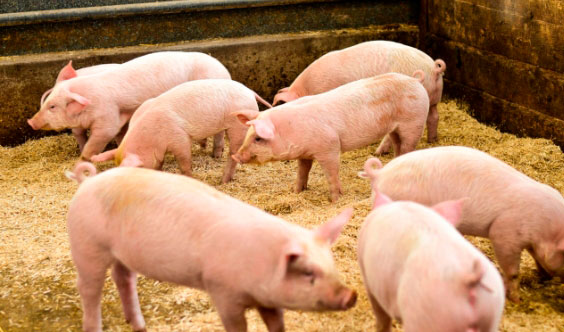
A major focus of the meeting was a discussion about the footprint for a Red Tractor flexible pen specification.  Some Red Tractor units have already made the move away from conventional pens and thousands of new flexi pens are being built or planned. The discussion highlighted that layout and management are just as important as square metres. Factors like the sow’s turning circle, pen design, ventilation, and the timing of crate opening can also have a great impact on welfare. Larger pens, while offering more space, can also bring challenges around temperature control, piglet care, and staff safety if not managed carefully. 

The board agreed with the TAC recommendation that early adopters must be protected with grandfather rights if Red Tractor set a specification.

Environmental Standards

We discussed if Red Tractor should supply the industry to meet environmental challenges, particularly around water and air quality. Most metrics, such as carbon, water, and waste, are already covered by retailers or regulation.

There was little appetite for Red Tractor to look at sustainability at this time. The TAC was already looking at existing Red Tractor environmental protection standards to consider if there is a need to strengthen and would report back to Board.

WATOK Licensing

Another key issue we discussed was government regulation and process in relation WATOK licence application.  Red Tractor has been in direct discussions with Defra and APHA to seek solutions. Expected within the next 3 months for England, the license application process will be changed to include electronic application process, group applications, better scheduling of APHA visits and inclusion of farm vet attestation as proposed by the PVS. The situation remains less clear in Wales and Northern Ireland where clarification is being sought. Red Tractor will communicate with members when possible. In the meantime, a derogation will apply to the related standard. 

Animal welfare and handling

We also discussed the ongoing importance of compliance in the context of animal welfare campaigns. Red Tractor is working with representatives from across the industry to raise awareness of risks and how to manage the increasing likelihood of activist activity on farms. Retailers support this coordinated approach, helping protect members and maintain confidence across the supply chain. 

Finally, the board recognised that good welfare depends on culture as much as compliance. There is a need for more practical, face-to-face training across the industry and clearer expectations for what “good welfare culture” looks like.

Stewart Houston

Chair, Red Tractor Pigs Sector Board

Pigs Sector Board Members:

  • Stewart Houston – Chair
  • Grace O’ Gorman – TAC Chair
  • William de Klein – Processor
  • Lizzie Wilson – NPA
  • Stephen Waite – Processor
  • Natalie Smith (substitute for Jemma Flitton) – Retailer
  • Alex Thomsett – PVS
  • Mark Haighton – AHDB
  • Muhamed Maliki – Processor
  • Pig Producer Reps x 4

19 Feb 2026

Dairy Sector Board Update – February 2026

Message from Tim Lock, Dairy Sector Chair, Red Tractor

Dear Members,

The Dairy Sector Board met on 10 February 2026 for a productive and wide-ranging discussion focused on standards development, environmental regulation, supply chain resilience and opportunities to support members through upcoming changes.

Standards review and stakeholder feedback

The Dairy Technical Advisory Committee (TAC) chaired by Dr Amy Jackson, continues to make good progress in its review of the Red Tractor Dairy Standards. Since beginning work in October, the TAC has been meeting regularly and is now close to completing its review of milk production standards.

The Committee is taking a thorough, line by line approach and is committed to reducing duplication and developing smarter, outcomes focused standards that reflect current legislation, new evidence and real world compliance data. The Board welcomed the constructive way all parts of the supply chain are contributing to the process. 

To ensure transparency and collaboration, the TAC will share draft sections of the revised standards with the Dairy Sector Board for review as they become available. 

As part of this work, we also reviewed stakeholder responses to the priorities set out for the dairy scheme. While the number of responses was lower than hoped, the feedback broadly supported the direction of travel, and we will pass relevant insights to the TAC to inform the standards review. 

Water and air quality

The Board held an important discussion on water and air quality, following a request from the Red Tractor Board of Directors for each sector to consider potential future expectations in this area.

The Sector Board was asked to consider, at a high level, what future air and water expectations could look like, as part of routine scenario planning and scoping work. 

This was a request for consideration, not a proposal or request for change.  

Red Tractor recently hosted an online briefing to outline the current regulatory landscape which helped clarify the context behind this request. The Board also received a valuable update from NFU’s Nutrient Management Specialist, on the Agricultural Pollution Regulatory Review currently underway in England.  

DEFRA is actively exploring industry led alternatives that could reduce the burden and cost on farmers of potential permitting, and we discussed how Red Tractor’s experience in areas such as area management and voluntary antibiotic stewardship may help shape any future solutions-led alternatives that could reduce the burden.

The Board agreed there may be a role for Red Tractor in supporting an industry-led approach, but the issues are complex, vary across the devolved nations, and will require detailed exploration. We will keep this on our agenda over the coming months. 

Sustainable Soy

The Board heard an update from Nick Major on the evolving regulatory environment, including developments in Europe and the UK. As supply chain solutions mature, Red Tractor will continue to assess how best to respond on behalf of our members.

Updates to the Member Portal

We heard about the significant improvements being made to the Red Tractor Member Portal. These enhancements are designed to streamline assessments and give members more userfriendly digital tools. 

Assessors have been trained on the new system and will use the Portal when members choose to adopt it. Portal use remains optional. 

Animal handling training

The Board reaffirmed the need for consistent, sector wide training on animal handling, particularly in light of increased activist activity and wider scrutiny. Ensuring every person on farm understands and follows good handling practices is essential to maintaining high welfare standards. 

Thank you to all Board members and contributors for their insight and commitment. As always, our focus remains on supporting dairy farmers, strengthening trust in the Red Tractor scheme and ensuring our standards remain proportionate, practical and future ready. 

Tim Lock

Chair, Red Tractor Dairy Board

Dairy Sector Board Members

  • Tim Lock – Chair
  • Peter Dawson – Dairy UK
  • Ian Harvey – NFU England and Wales
  • Alice Miller – British Cattle Veterinary Association
  • Murray Patrick – NFU Scotland
  • Paul Dover – Processor
  • Richard Collins – Processor
  • Amy Jackson – TAC Chair
  • Tom Atkins – Multiple Retailer
  • Joseph Keating – BRC
  • Mervyn Gordon – UFU
  • Mark Brooking – Processor
  • Christine Sloan – Processor
  • Jonathan Wilkinson – NFU England and Wales
  • Paul Flanagan – AHDB

19 Feb 2026

Red Tractor launches new portal features to ease audit burden for farmers

Red Tractor has introduced three major improvements to its member portal, designed to reduce assessment preparation time, stress and paperwork burden for farmers and growers.

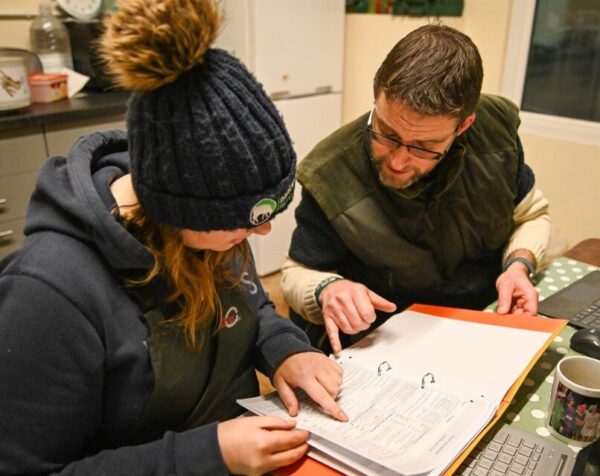
The updates allow members to take live, geo-stamped photos directly within the portal as compliance evidence, using their mobile phone.

Instead of manually recording tasks on paper, like cleaning the grain store or changing milk liners, the portal automatically captures location, date and time data, creating an instant record and demonstrating due diligence.

Making the portal work around how farms actually operate

Philippa Wiltshire, Director of Standards and Operations at Red Tractor says: “This addresses a genuine frustration farmers and growers have shared, which is maintaining paper records for routine tasks that could be evidenced far more efficiently.

“This is about making the portal work around how farms actually operate.”

Further improvements include a new shortlist function which flags ‘high impact’ documents for uploading prior to assessments, plus embedded links to third-party templates, such as Yellow Wellies’ health and safety resources.

Preparation time where it matters most

Mrs Wiltshire added: “To help reduce the time spent preparing for audits, we’ve worked with the certification bodies to identify which documents will have the biggest impact on a farmer’s physical assessment. These can be seen on the portal using a simple toggle button.”

Importantly, these changes will not affect access to farm data either by Red Tractor or the portal developer Map of Ag, Mrs Wiltshire assures.

“Farmers and growers’ control of data is crucial and remains at the forefront of any enhancements we make to the system.

“In addition, individuals retain full choice over whether and how they use these features.”

Integrating standards compliance into systems farmers already use

Beyond its own portal, Red Tractor is working with third-party software providers to integrate standards compliance into systems farmers already use.

New crops checklists developed with MeritAgCheck are due to launch imminently, and discussions are underway with other providers across the sectors, including Lely in dairy.

Jon Stewart, Director at MeritAgCheck says: “Having the Red Tractor requirements built directly into MeritAgCheck means farmers can capture the information once and use it for multiple purposes, including their farm assurance. The integration makes the process much smoother for our customers and ensures they stay audit-ready without extra admin, saving them time that they can re-invest into other activities.”

Mrs Wiltshire adds: “We want to work with any company whose reporting could overlap with what’s required for Red Tractor assessments. If we can reduce duplication by working with software already in use, then that’s progress too.”

These latest updates form part of a wide range of improvements Red Tractor is implementing in response to the Farm Assurance Review – from reducing audit burden, to communications and engagement and the use of practical digital tools.  

Guidance on using the new portal features, including ‘how to’ videos can be found here.

12 Feb 2026

Red Tractor awareness reaches 75% following 25th anniversary campaign

Three quarters of UK adults now recognise the Red Tractor logo, according to new consumer research.

YouGov tracking data shows awareness of Red Tractor is at 75% – a 3% increase since January 2025 – putting the scheme marginally ahead of the Lion Mark for eggs at 72% for the first time.

Growing awareness and visibility

Director of Marketing and Commercial at Red Tractor, Richard Cattell, attributes the growing awareness to both the breadth of the scheme, visibility of the logo on packs and the impact of the ‘With you for 25 years’ consumer campaign, which launched in August and is set to reach 46.9 million people by March 2026.

“Red Tractor and other farm assurance schemes play an important role in helping shoppers make informed choices,” says Mr Cattell.

“For over 25 years the Red Tractor logo has been a symbol of safe, traceable and responsibly produced food, underpinned by the efforts of more than 40,000 farmers and growers working to deliver high standards year-round.

“Our new campaign not only celebrates British food but helps to remind consumers why the scheme is trusted by every major UK supermarket,” he adds.

Consistent, trusted marks in shoppers’ minds

“With ongoing questions about the clarity and value of food labelling, achieving this level of consumer recognition demonstrates that consistent, trusted marks can establish themselves in shoppers’ minds.”

Peter Chandley, Head of Quality and Food Safety at Weetabix says: “At Weetabix, sourcing responsibly is fundamental to everything we do. That’s why all the wheat we use from within a 50-mile radius of our mills is Red Tractor assured.

“Assurance plays a vital role in giving us confidence in the safety, traceability and compliance of our wheat supply chain, while also supporting high standards of British farming.

“It provides independent verification right back to the farm, helping us deliver consistently high-quality products to our consumers and reinforcing our commitment to working with trusted UK growers.”

Giving consumers confidence

Red Tractor CEO, Jim Moseley adds: “Given that we’ve only been advertising since the end of 2018 this is a fantastic result.

“Clear, trusted labelling is vital in building confidence in British food, and while assurance schemes cover different products and standards, they share the same goal of giving consumers confidence,” he says.