Search

26 Feb 2026

Support for building farming’s resilience at NFU Conference

Five of Red Tractor’s sector chairs were pleased to meet farmers and growers at the NFU Conference in Birmingham this week. The theme of the conference was building farming’s resilience, with discussions on food security, trade, government strategy, and supply chain resilience.

How assurance can better support farmers and growers

For Red Tractor, this event provided an important opportunity to hear directly from farmers and growers about how assurance can better support them. Conversations covered practical issues, such as assessment consistency, reducing unnecessary bureaucracy, recognising good practice, and ensuring standards remain both robust and proportionate.

The conference also reaffirmed the role that credible, independent standards for British food play in securing markets, building trust and responding to growing demand for homegrown healthy food.

Modernise assurance while keeping farmers at its core

Alistair Mackintosh, Chair of Red Tractor said: “The NFU Conference is a really valuable opportunity to connect with the farming industry and understand current and future challenges. Reoccurring themes of trade resilience, standards, pollution prevention and digital innovation, closely align with Red Tractor’s ongoing work to modernise assurance while keeping farmers at its core.

“The insight, challenges and constructive feedback we received will help inform the next phase of Red Tractor’s development as we work to deliver an assurance scheme that is trusted, fair and fit for the future of UK farming.”

19 Feb 2026

Red Tractor launches new portal features to ease audit burden for farmers

Red Tractor has introduced three major improvements to its member portal, designed to reduce assessment preparation time, stress and paperwork burden for farmers and growers.

The updates allow members to take live, geo-stamped photos directly within the portal as compliance evidence, using their mobile phone.

Instead of manually recording tasks on paper, like cleaning the grain store or changing milk liners, the portal automatically captures location, date and time data, creating an instant record and demonstrating due diligence.

Making the portal work around how farms actually operate

Philippa Wiltshire, Director of Standards and Operations at Red Tractor says: “This addresses a genuine frustration farmers and growers have shared, which is maintaining paper records for routine tasks that could be evidenced far more efficiently.

“This is about making the portal work around how farms actually operate.”

Further improvements include a new shortlist function which flags ‘high impact’ documents for uploading prior to assessments, plus embedded links to third-party templates, such as Yellow Wellies’ health and safety resources.

Preparation time where it matters most

Mrs Wiltshire added: “To help reduce the time spent preparing for audits, we’ve worked with the certification bodies to identify which documents will have the biggest impact on a farmer’s physical assessment. These can be seen on the portal using a simple toggle button.”

Importantly, these changes will not affect access to farm data either by Red Tractor or the portal developer Map of Ag, Mrs Wiltshire assures.

“Farmers and growers’ control of data is crucial and remains at the forefront of any enhancements we make to the system.

“In addition, individuals retain full choice over whether and how they use these features.”

Integrating standards compliance into systems farmers already use

Beyond its own portal, Red Tractor is working with third-party software providers to integrate standards compliance into systems farmers already use.

New crops checklists developed with MeritAgCheck are due to launch imminently, and discussions are underway with other providers across the sectors, including Lely in dairy.

Jon Stewart, Director at MeritAgCheck says: “Having the Red Tractor requirements built directly into MeritAgCheck means farmers can capture the information once and use it for multiple purposes, including their farm assurance. The integration makes the process much smoother for our customers and ensures they stay audit-ready without extra admin, saving them time that they can re-invest into other activities.”

Mrs Wiltshire adds: “We want to work with any company whose reporting could overlap with what’s required for Red Tractor assessments. If we can reduce duplication by working with software already in use, then that’s progress too.”

These latest updates form part of a wide range of improvements Red Tractor is implementing in response to the Farm Assurance Review – from reducing audit burden, to communications and engagement and the use of practical digital tools.  

Guidance on using the new portal features, including ‘how to’ videos can be found here.

12 Feb 2026

Red Tractor awareness reaches 75% following 25th anniversary campaign

Three quarters of UK adults now recognise the Red Tractor logo, according to new consumer research.

YouGov tracking data shows awareness of Red Tractor is at 75% – a 3% increase since January 2025 – putting the scheme marginally ahead of the Lion Mark for eggs at 72% for the first time.

Growing awareness and visibility

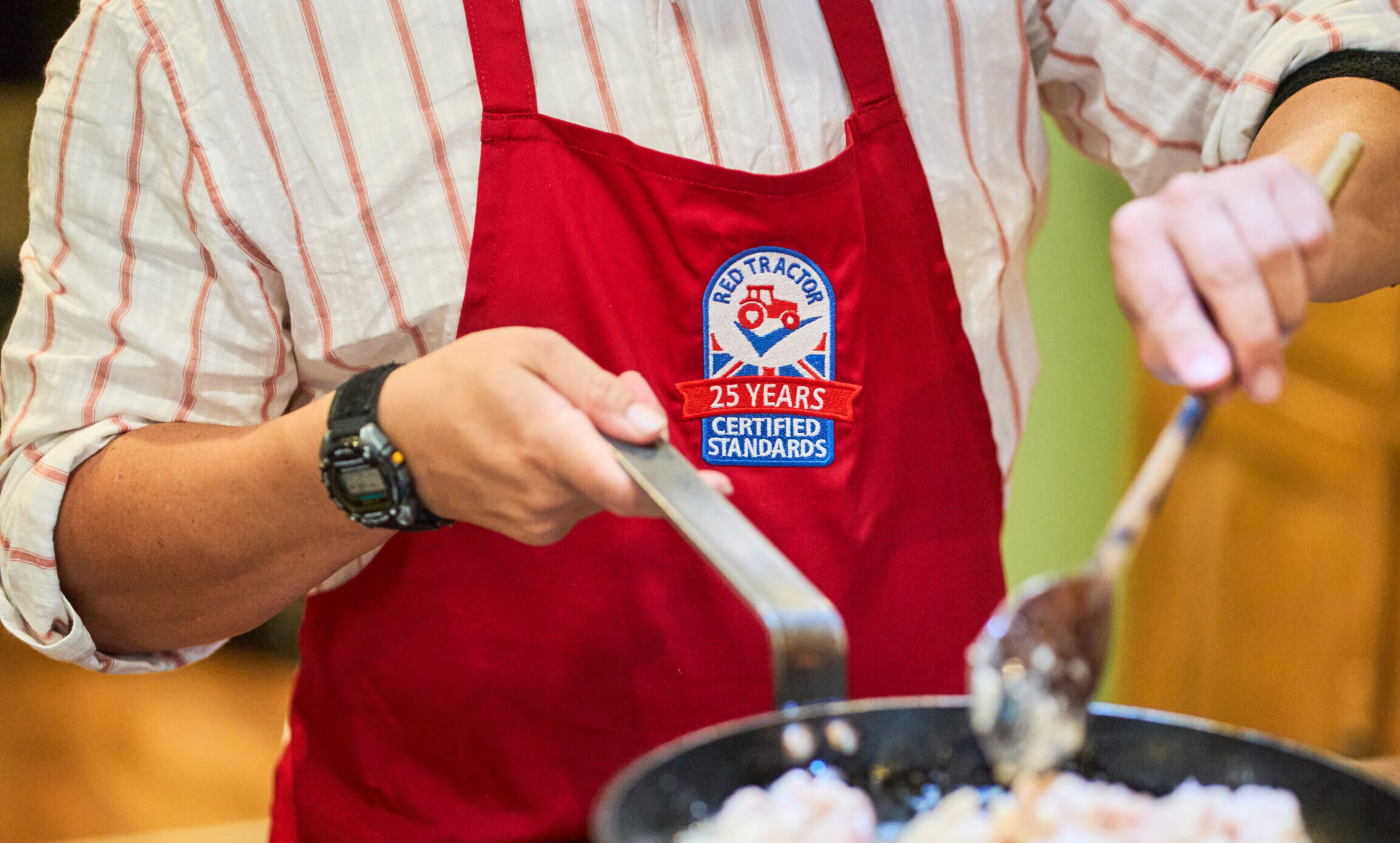
Director of Marketing and Commercial at Red Tractor, Richard Cattell, attributes the growing awareness to both the breadth of the scheme, visibility of the logo on packs and the impact of the ‘With you for 25 years’ consumer campaign, which launched in August and is set to reach 46.9 million people by March 2026.

“Red Tractor and other farm assurance schemes play an important role in helping shoppers make informed choices,” says Mr Cattell.

“For over 25 years the Red Tractor logo has been a symbol of safe, traceable and responsibly produced food, underpinned by the efforts of more than 40,000 farmers and growers working to deliver high standards year-round.

“Our new campaign not only celebrates British food but helps to remind consumers why the scheme is trusted by every major UK supermarket,” he adds.

Consistent, trusted marks in shoppers’ minds

“With ongoing questions about the clarity and value of food labelling, achieving this level of consumer recognition demonstrates that consistent, trusted marks can establish themselves in shoppers’ minds.”

Peter Chandley, Head of Quality and Food Safety at Weetabix says: “At Weetabix, sourcing responsibly is fundamental to everything we do. That’s why all the wheat we use from within a 50-mile radius of our mills is Red Tractor assured.

“Assurance plays a vital role in giving us confidence in the safety, traceability and compliance of our wheat supply chain, while also supporting high standards of British farming.

“It provides independent verification right back to the farm, helping us deliver consistently high-quality products to our consumers and reinforcing our commitment to working with trusted UK growers.”

Giving consumers confidence

Red Tractor CEO, Jim Moseley adds: “Given that we’ve only been advertising since the end of 2018 this is a fantastic result.

“Clear, trusted labelling is vital in building confidence in British food, and while assurance schemes cover different products and standards, they share the same goal of giving consumers confidence,” he says.

11 Feb 2026

Seeking support if you’re struggling with mental wellbeing

Red Tractor is supporting Yellow Wellies to encourage farmers to seek help

Farming is an industry where resilience is often worn as a badge of honour but it’s important to recognise the impact of poor mental wellbeing. Nobody should have to face their struggles alone. Each of us has a role to play in creating a healthier and more supportive environment to live and work in.

Red Tractor is supporting The Farm Safety Foundation (Yellow Wellies) to encourage farmers to seek help. The aim of the initiative is to raise awareness of mental health in the farming industry and to reduce the stigma around poor mental health.

Farmer wellbeing levels in decline

Research from the September 2025 Farm Safety and Wellbeing survey reveals a decline in mental wellbeing among British farmers over the age of 40. Wellbeing levels have dropped to the lowest point in four years. The data also highlights a disparity between the overall wellbeing within the farming community, which has been measured against the general population. The shows there is an urgent need for targeted support and intervention.

We cannot farm through mental health struggles

Red Tractor Chair, Alistair Mackintosh says: “We often talk about ‘farming through’ every challenge, be it weather, markets, or disease, but we cannot ‘farm through’ a mental health struggle.

“These latest findings are a sobering wake-up call. It is no longer enough to just work hard, we must work to look out for one another. Admitting things are tough isn’t a failure of character, it’s a necessary step to ensure our farms and our families have a future.

“We owe it to ourselves to speak up before the silence becomes too heavy to carry.”

If you’re struggling, talking to someone can make a big difference. Whether it’s family, friends, or a professional. Reaching out is a sign of strength.

Organisations there for you:

  • Farming Community Network (FCN) – Pastoral and practical support, helpline 7am-11pm every day. t: 03000 111 999
  • YANA Project – Confidential mental health support and counselling funding in Norfolk, Suffolk, and Worcestershire. t: 0300 323 0400
  • DPJ Foundation – Welsh mental health charity to support those in agriculture with mental health problems. t: 0800 587 4262
  • RABI – Financial support for farming families facing hardship. t: 0800 188 4444
  • Addington Fund – Housing and hardship grants for farming families in England and Wales. t: 01926 620135
  • RSABI (Scotland) – Practical, financial, and emotional support for those in Scottish agriculture. t: 0808 1234 555
  • Rural Support (NI) – Provides impartial support and guidance for the farming community in Northern Ireland. t: 0800 138 1678

Support is always available and you are never alone.

09 Feb 2026

Foot and Mouth Disease anniversary is a stark reminder of why assurance standards matter

As we mark the 25th anniversary of the Foot and Mouth Disease (FMD) outbreak, it’s an important moment to reflect on the lessons learnt and the ongoing significance of maintaining high standards to protect both food safety and our farming industry.

Alistair Mackintosh, Red Tractor Chair, shares his reflections on the devastating impact the FMD outbreak had on farming communities across the UK.

A year that changed farming

The 2001 outbreak reshaped the agricultural sector, and while some farms were not directly infected, all were impacted in some way.

Alistair recalls the challenges of managing his beef, sheep and arable farm while surrounded by FMD restrictions.

“At the time, people were talking about winners and losers, but there were no winners; everybody suffered in different ways,” he reflects.

The immediate focus of the outbreak was to stop the spread of the disease, and for those not infected, the key challenge was to restore trade.

Alistair remembers the restrictions on movement and trade that affected his farm operations: “I remember lambing with 800 sheep in one field, unable to move them. It was an absolute nightmare.”

The importance of border controls and British standards

Reflecting on those difficult times, Alistair emphasises the importance of maintaining high standards, particularly regarding the products imported into the UK.

“To prevent another outbreak, we must ensure our borders are properly controlled, and that imported products meet at least the same standards that British farmers adhere to,” he says.

In particular, Alistair highlights the growing concern among farmers about imported goods produced to lower standards. This, he warns, not only jeopardises the UK’s farming industry but also risks exposing consumers to subpar products.

Protecting farmers and consumers

The aftermath of the FMD outbreak reinforced the need for rigorous measures to protect UK farmers from imported diseases and to ensure consumers continue to have access to high-quality, safe food products.

As Alistair points out: “British farmers must always be vigilant in preventing another outbreak of this terrible disease, and it’s vital that government continues to protect our borders from illegal meat coming into the UK.”

This has never been more important, especially as the food supply chain becomes increasingly global.

Proper enforcement of border controls and maintaining high standards for imported products are essential for safeguarding both the industry and public health.

How Red Tractor contributes to rebuilding trust in British produce

The Foot and Mouth Disease outbreak of 2001 also underscored the need to rebuild trust in British food. Since then, assurance bodies like Red Tractor have played an important role in restoring consumer confidence.

“Farmers in the UK are committed to producing high-quality, affordable food. Red Tractor certification helps prove that commitment,” Alistair explains.

Independent auditors inspect farms every 12-18 months to ensure that they meet rigorous standards for animal welfare, food safety, and environmental responsibility.

Alistair believes that trust is built on transparency and proof, which is exactly what Red Tractor offers.

“It’s not enough to just tell people that we produce safe, sustainable food. We have to show it and that’s what Red Tractor’s assurance scheme is all about.”

Moving forward: maintaining robust standards

As the farming industry continues to evolve, Alistair stresses the importance of ongoing review and refinement of assurance standards.

“The FMD outbreak serves as a reminder of the need for robust, regularly reviewed standards to ensure consumer and retailer trust in British produce,” he adds.

The current review of all assurance standards within Red Tractor is an opportunity for farmers to engage and contribute to the ongoing development of the system.

As Alistair points out, “Farmers must have a voice in how standards evolve, ensuring that they align with the changing needs of the industry.”

At Red Tractor, our mission remains focused on safeguarding the reputation of British produce, supporting our farmers, and protecting consumers.
22 Jan 2026

Strengthening food safety through industry collaboration

Working together in the leafy salads sector 

Food safety is at its strongest when the whole supply chain works together. Over the past two years, collaboration across the salads industry has played a vital role in shaping new standards designed to strengthen food safety, build confidence, and deliver consistent standards for growers and customers alike.

A shared response to a shared challenge

Following the 2024 outbreak of Shiga toxin-producing E. coli (STEC) linked to supermarket sandwiches, the salads sector came together with renewed focus on food safety. In response, industry partners have worked collectively with Red Tractor to strengthen practices at grower level, including enhanced food safety training and a comprehensive review of existing guidance.

This work was informed by expertise and insight from across the supply chain, growers, retailers, trade bodies and technical specialists ensuring that lessons learned translated into practical improvements on farm. 

Industry-led momentum for change 

With strong retailer backing for the updated Microbiological Guidance for Growers (MGG), the British Leafy Salads Association (BLSA) and the Chilled Foods Association (CFA) approached Red Tractor in early 2025. Their request was clear: develop a dedicated leafy salads module that could provide a consistent, credible and industry-wide approach to food safety assurance. 

The shared ambition behind this was to: 

  • Raise the bar on food safety at grower level 
  • Demonstrate robust, trusted standards to customers 
  • Reduce the need for multiple, individual customer audits 

Developing standards, together 

In response, and led by Barbara Bray MBE, Red Tractor brought together a specialist working group made up of respected experts from across the supply chain. This collaborative group combined scientific expertise with direct grower experience to develop a set of proposed standards that are: 

  • Science-based, reflecting the latest evidence and guidance 
  • Practical and achievable for growers 
  • Grounded in real farming and growing conditions 

Speaking at the recent BLSA food safety workshop, Red Tractor Fresh Produce Technical Manager Sam Trevey said, “This work demonstrates the power of industry collaboration. By aligning expertise and sharing responsibility across the supply chain, we’re proposing standards that balance robust food safety with real-world practicality, shaped by those who know the sector best.” 

Members voices matter

The Red Tractor Fresh Produce Technical Advisory Committee is currently consulting on enhanced food safety standards for leafy salads growers.

The draft standards are now open for wider feedback, and further grower input will help us to shape the final outcome. Grower insights will help ensure the standards are practical, proportionate and work on farm.

Please submit feedback by Friday 13 February 2026.

16 Jan 2026

What the UK’s negligible BSE risk status means for Red Tractor beef members

The UK has officially been recognised as having negligible risk status for bovine spongiform encephalopathy (BSE).

For Red Tractor beef members, this confirms that years of work on farm assurance, traceability and feed controls are delivering results, and helping to protect the reputation of assured British beef at home and overseas.

Why the UK’s negligible BSE risk status matters

EU member states have agreed that the UK now meets the strict criteria for negligible BSE risk. This is expected to support:

  • Stronger confidence in assured British beef
  • Improved access to export markets
  • Better long-term value from the Red Tractor beef assurance scheme

Devon beef farmer and Red Tractor Beef and Lamb Sector Board Chair, John Dracup, says the new status reflects effort across the industry:

“Gaining negligible risk status for BSE is the result of work carried out by government agencies, processors and the whole farming community, including assurance bodies like Red Tractor.

“It demonstrates the quality of our beef production systems ad it will enable the UK to expand the range of products we can export and the number of countries we can potentially supply.

“For Red Tractor members, it’s a clear sign that the standards you work to every day are recognised internationally as helping to keep British beef safe, traceable and trusted,” he says.

How Red Tractor supported the UK’s BSE application

Achieving negligible BSE risk required robust evidence of long-term controls on farm and throughout the supply chain.

Red Tractor Senior Dairy, Beef and Lamb Technical Manager, Jemma Holden, explains that the scheme played an active role in supporting the government’s case:

“As part of the process, Red Tractor submitted data for review, including information on what our standards cover and what the non-conformance rates are.

“We also assisted Defra by sharing questionnaires about feed bin use. All of this helped achieve the outcome.”

Traceability: A turning point after the BSE crisis

Herefordshire beef farmer and Red Tractor member, Mick Beaumont, remembers how the BSE crisis affected his family farm – and how assurance and traceability helped rebuild confidence.

“When the BSE crisis hit in 1996, the beef price went through the floor and we lost a lot of money. It remains the only year we’ve ever recorded a loss as a business,” he says.

With EU bans on UK beef and consumer confidence badly hit, the family needed a way to demonstrate the standards behind their cattle.

“We became farm assured because we wanted to sell our animals and it was becoming increasingly difficult to find a market without accreditation,” adds Mr Beaumont.

“Being farm assured meant we could prove the traceability of our cattle and give confidence to the consumer that we were farming in the right way to some of the most robust standards in the world.”

For Mick, assurance is about demonstrating that everything on farm is done properly.

“Traceability was the biggest factor that allowed the industry to combat BSE, and Red Tractor has played a key part in that by evidencing to consumers and the supply chain that things are being done properly on farm,” he says.

What this means for your Red Tractor assured beef business

For Red Tractor beef members, the UK’s negligible BSE risk status reinforces the value of being part of an independently audited assurance scheme.

As Red Tractor marks 25 years of working with British farmers, this milestone underlines that the daily discipline of meeting standards contributes to something bigger: a world-leading reputation for safe, traceable, responsibly produced Red Tractor beef.

18 Dec 2025

Red Tractor welcomes Farm Profitability Review

Red Tractor welcomes the Farm Profitability Review’s recognition of its role in supporting UK farming’s future.  
 
Red Tractor CEO Jim Moseley commented: 
  
“We’re pleased that the Farm Profitability Review highlights Red Tractor’s role in supporting British farming and the integrity of British food.  

“The review’s recommendations on extending origin labelling linked to assurance schemes like Red Tractor, particularly into the out-of-home sector, reflect what we’ve long championed – that transparent standards together with traceability and British labelling, benefit farmers, growers and consumers.  
  
“With Red Tractor now providing assurance and proof of provenance on £18 billion worth of British food, and our logo recognised by 75% of UK consumers, we’re proud to help farmers add value, differentiate their products from imports and demonstrate their commitment to British standards. The review reinforces that trusted certification schemes are essential tools for building consumer confidence and supporting a resilient farming sector.  
  
“We look forward to working in collaboration with government, retailers, and the food service sector to strengthen supply chain fairness and ensure high standards remain at the heart of British food.” 

Jim Moseley, CEO of Red Tractor will retire from full time employment in April 2026
Jim Moseley, CEO of Red Tractor

08 Dec 2025

Red Tractor shares priorities for delivering improvements for farming sectors

Sector Boards initiate review of farm standards in 2026

Red Tractor has published priorities for delivering improvements in each farming sector. The priorities, developed by Red Tractor’s Sector Boards, will guide improvements to the scheme and mark an important step in the organisation’s ongoing commitments to greater transparency and delivering positive, tangible change for UK farmers and growers.

Chair of Red Tractor, Alistair Mackintosh, says: “By setting out these priorities, we’re giving stakeholders, including farmers and growers, a clear view of the direction of each travel in each farming sector and providing an early opportunity for feedback.”

A collaborative approach

The priorities have been developed and agreed collaboratively by representatives sitting on Red Tractor’s Sector Boards and include a review of farming standards in 2026. They sit alongside wider improvements already in progress including the Red Tractor portal, communications and assessor training.

All stakeholders are invited to share feedback by 1 February 2026 via the Red Tractor website.

Alistair Mackintosh, explains: “The collective focus of the review is to support reduction of unnecessary audit burden, delivering efficiency while maintaining rigour and ensuring that every audit point helps farmers to demonstrate due diligence or meet their customers’ expectations.”

Developed by Sector Boards

The priorities have been developed through Red Tractor’s established governance structure. The Red Tractor Board sets the organisation’s strategic direction, while each farming sector is represented by its own Sector Board made up of farmers, growers, vets, processors, retailers and supply-chain experts. 

Each Sector Board will continue to oversee the review process, using their collective knowledge to consider the specific needs and pressures facing their sector.

Mr Mackintosh explains that the next phase of work moves to the Technical Advisory Committees (TACs), which bring together experts from across each sector to develop detailed recommendations designed to deliver the priorities and objectives.   

“The TACs role is to explore options, test practicality and develop proposals that reflect both the objectives set by the Sector Boards and the realities of on-farm delivery,” he says.  

Greater transparency and clearer opportunities for feedback

“Farmers and growers have asked for greater transparency and clearer opportunities to have their say, and this is what we aim to achieve. 

“Feedback at this early stage will help shape the work that follows,” says Mr Mackintosh. 

Further opportunities to comment on draft standards will take place during 2026, before final, UKAS-accredited standards are published and implemented in 2027.

To learn about the priorities for each sector and to share feedback, visit redtractor.org.uk/improvements

01 Dec 2025

Red Tractor launches outdoor pigs standards with on-pack logos

Red Tractor is introducing two new modules to the Red Tractor Pigs Scheme – Enhanced Welfare Outdoor Bred and Free Range – accompanied by distinctive on-pack logos to help Red Tractor-assured pig producers and Red Tractor-licensed food businesses clearly communicate higher animal welfare inputs to shoppers.

Stewart Houston, Chair of the Red Tractor Pigs Sector, said: “These new standards will demonstrate welfare inputs that are a step above our already high core range. The new logos will provide consumers with greater choice on the shelf, while the standards sitting behind them provide outdoor producers a way of reducing their on-farm audits while maintaining access to existing markets.”

Building on the success of additional welfare modules

Developed by industry and subject to extensive consultation over the last 18 months, the new modules build on the success of Red Tractor’s additional welfare modules in the poultry sector. The modules have been benchmarked against existing market standards to ensure they reflect meaningful, recognised welfare standards while fitting within the practical realities of commercial pig production.

To benefit the whole supply chain

The changes are designed to benefit the whole supply chain. For producers, the modules specify standards for outdoor systems within the Red Tractor Pigs Scheme – giving outdoor pig producers a straightforward, trusted way to show the welfare enhancements they deliver. For food businesses who are Red Tractor licensees, the modular approach offers a cost-effective option to demonstrate higher welfare on pack, menus, websites, paperwork and marketing materials. This is particularly timely as many businesses begin to plan packaging updates in the coming months. For retailers, the new logos will help shoppers make quicker, more confident choices at point of purchase by providing a consistent, recognisable and trusted welfare message across pork and poultry.

Reducing audit duplication has been a central aim of this work. The new modules and on-pack logos are intended to streamline assurance activity for producers who currently participate in multiple schemes – a recommendation central to the Farm Assurance Review – and to improve efficiency throughout the supply chain.

A trusted route for better welfare

Stewart Houston, Chair of the Red Tractor Pigs Sector, said: “Producers have been clear that they want fair recognition for the additional time, investment and care that goes into higher-welfare systems. These now modules and logos do exactly that – they give farmers a practical, trusted route to demonstrate better welfare while helping retailers and consumers to recognise those commitments easily. We developed the standards with wide industry input and by benchmarking against established schemes, so producers, licensees, customers and consumers can have confidence in what these logos represent.”

Technical information

FAQs

Click to read the answers.

For members

Contact your Certification Body to arrange this to be added to your existing Red Tractor membership.

Depending on where you are within your membership and assessment cycle will determine the correct next steps. Please contact your certification body to ensure they capture your wish to have enterprises added to your Red Tractor membership.

Red Tractor have transition arrangements in place that may mean your stock can enter the chain as Enhanced Welfare Outdoor Bred depending on the status of your RSPCA Assured certification. Please check the Red Tractor Transition Approval Decision tree to determine the correct step for yourself. Any questions can be directed to either your Certification Body or Red Tractor.

Please contact the team at Red Tractor to discuss this. We will look at the options you wish to ensure all parties are able to work within the requirements.

For licensees and food businesses

Only approved and licnesed companies can use our trademark wording or logos on product, paperwork, marketing materials, menus or websites and only then in accordance with the Licence Agreement. Please contact our Supply Chain Assurance team for more information: licensing@redtractor.org.uk

A licence fee is charged to food businesses when a Red Tractor product claim is being used. The licence fee for Enhanced Welfare Outdoor Bred and Free Range pork products is 0.1% of declared invoiced sales value (uncapped). As the most recognised, comprehensive and affordable assurance scheme in the marketplace vs other marques, Red Tractor is the best placed scheme to make Enhanced Welfare more accessible for consumers.  

If you are an approved and licensed company with Red Tractor, please get in touch with licensing@redtractor.org.uk to request our brand guidelines. Please include your licence number in all correspondence.

Yes, all logo use must be approved by our Supply Chain Assurance Team – please submit artwork prior to printing for approval and request logos from licensing@redtractor.org.uk. Please include your licence number in all correspondence.

If you are a current Red Tractor Processor Packer licensee, an additional technical approval will need to be completed for Enhanced Welfare Outdoor Bred or Free Range Pork. The technical information must be submitted and approved by Red Tractor before an Enhanced Welfare Outdoor Bred or Free Range claim can be made. You will be asked to enter details of your technical operations, suppliers (dependent on your type of business), products and customers as well as demonstrate that you meet our licensing eligibility criteria. 

If you are currently not a Red Tractor licensee and wish to onboard in order to make an Enhanced Welfare Outdoor Bred or Free Range pork claim, please contact the Supply Chain Assurance team at licensing@redtractor.org.uk who can discuss the process with you.