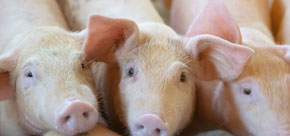
Pigs Standards
Download Pigs Standard Manual (including Enhanced Welfare Outdoor Bred and Free Range)
Download what’s changing to core standards –
BIOSECURITY AND DISEASE CONTROL Version 5.2
Click to view
Key – Those standards which have greater significance (all other standards are normal)
Recommendation – Those which do not affect certification
New – A completely new standard which the member must now adhere to
Revised – A standard that has changed and requires the member to take some different or additional action to before
Upgraded – The standard has been upgraded to a Key standard or from a Recommendation to a full standard
Appendix – Referenced in ‘How you will be measured’. Indicates that additional information is provided in the Appendices, which are available at the end of each section.
PG.BI.1 Key
A documented Biosecurity Policy must be in place
How you will be measured
PG.BI.1.a
PG.BI.1.b
PG.BI.1.c
Biosecurity Policy
PG.BI.2
Access to pig areas must be controlled as much as reasonably possible and visitor records must be kept
How you will be measured
PG.BI.2.a
PG.BI.2.b
Visitor record
PG.BI.3
The biosecure areas on the farm must be defined
How you will be measured
PG.BI.3.a
PG.BI.3.b
PG.BI.3.c
Farm map(s) indicating biosecure areas
PG.BI.4
It is recommended that vehicles collecting and delivering livestock do not enter the site biosecure area
How you will be measured
PG.BI.4.a
PG.BI.4.1
Fallen stock collection vehicles must not enter the site biosecure area
PG.BI.5
On entry to a biosecure area all staff and visitors must be wearing clean footwear and clean clothing
How you will be measured
PG.BI.5.a
PG.BI.5.b
PG.BI.7
Hand cleanliness must be maintained
How you will be measured
PG.BI.7.a
PG.BI.7.b
PG.BI.9
General site biosecurity measures are in place
How you will be measured
PG.BI.9.a
PG.BI.9.b
PG.BI.9.c
PG.BI.11
All units must be a member of the AHDB Significant Diseases Charter or Scottish Pig Health Charter and report in line with the Terms and Conditions
How you will be measured
PG.BI.11.a
PG.BI.11.b
- Site status on PigHub
- QVRs for previous four quarters
PG.BI.12
Measures must be in place to minimise disease transmission between batches (REVISED)
How you will be measured
PG.BI.12.a
PG.BI.12.b
PG.BI.12.c
PG.BI.12.d
PG.BI.12.e
PG.BI.13
A documented Wild Animal* Control Plan must be implemented to minimise wild animal access to pigs on outdoor units
How you will be measured
PG.BI.13.a
PG.BI.13.b
Wild Animal Control Plan
PG.BI.14
The Food Standards Agency risk assessment tool for Trichinella is applied annually to relevant units to determine controlled housing status
How you will be measured
PG.BI.14.a
PG.BI.14.b
QVRs for previous four quarters
- AHDB guidance on biosecurity on pig farms: https://ahdb.org.uk/knowledge-library/biosecurity-on-pig-farms
- AHDB Significant Diseases Charter: https://ahdb.org.uk/knowledge-library/significant-diseases-charter
More Standards
Download Pigs Standard Manual (including Enhanced Welfare Outdoor Bred and Free Range)
Download what’s changing to core standards –
BI.3 – The overall site biosecure area should encompass wider areas of the unit, such as the yard, which are accessed by persons involved in the care of the pigs and which pigs may be moved to or through. The overall site biosecure area may or may not be defined by the farm’s perimeter boundary. Visible markers at entry points into overall site and other biosecure areas may take the form of a line on the ground, a sign, and/or other similar physical indicators to alert the driver they are entering a biosecure area.