Fresh Produce Standards Consultation
We’re inviting feedback on proposed changes to the Red Tractor Fresh Produce Standards.
The Fresh Produce Technical Advisory Committee, representing the whole supply chain, have volunteered hundreds of hours of their time to review every standard and audit point to make requirements clearer, more proportionate to crop risk and better focused on protecting food safety.
Having been reviewed and agreed by the Fresh Produce Sector Board, we are now seeking to understand what these proposals would mean in practice, particularly to the farms and businesses that rely on them for assurance.
Your feedback shapes the final standards. The Fresh Produce Technical Advisory Committee and Sector Board will consider all feedback before finalising the revised standards.
Review the proposals and share your feedback
Open to all stakeholders until 22 December 2026.
A message from the sector chair
“Fresh Produce covers a highly diverse range of crops, businesses and production systems, and one of the clearest messages we have heard is that standards should better reflect those differences. These proposals represent a thorough review of every standard and audit point, with the aim of ensuring that the right requirements apply to the right crops and activities. I would like to encourage everyone with an interest in the sector to take part in the consultation and provide feedback on how the proposals would work in practice.”
Veryan Bliss, Fresh Produce Chair

How the proposals were developed
Collaboration and consensus
In 2025, Red Tractor committed to review its standards with the objective of delivering real, tangible change for growers. This is that review. It is a review for the sector, by the sector. Red Tractor staff facilitated the discussion, but industry representatives are the collective decision makers.
The Fresh Produce Technical Advisory Committee have worked collaboratively to review every standard line by line. Requirements were considered for their purpose, clarity, applicability, food-safety contribution, auditability, compliance history and wider assurance value.
Following this extensive technical review, the draft standards were reviewed by the Fresh Produce Sector Board.
The changes aim to deliver the priorities set by the Sector Boards in December 2025, and incorporate advice from The Food Standards Agency, APHA, stakeholders throughout the fresh produce supply chain and the Certification Bodies.
Assurance beyond standards
This consultation focuses on the standards, but experiences of assurance are also influenced by how standards are applied and delivered. In parallel with this review, Technical Advisory Committees and Sector Boards, supported by the Red Tractor team, are looking at assessment cycles, what is checked during assessments, and how technology can better support assessments. The aim is to deliver further efficiencies while maintaining rigour. More on this will follow in 2027.
Fresh Produce Governance
Find out more about the Fresh Produce Sector Board and TAC, and their objectives
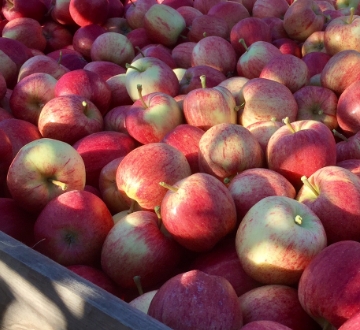
| Category | Crop type description | Risk level | Example crops |
| 0 | Sprouted seeds and seedlings | Highest | Salad cress, micro leaves |
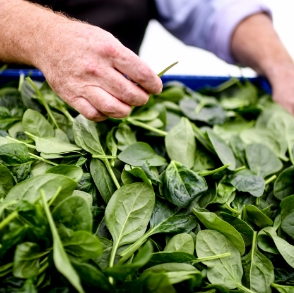
| 1 | Usually eaten raw, with the edible part close to or in contact with the ground | High | Lettuce, spinach, watercress |
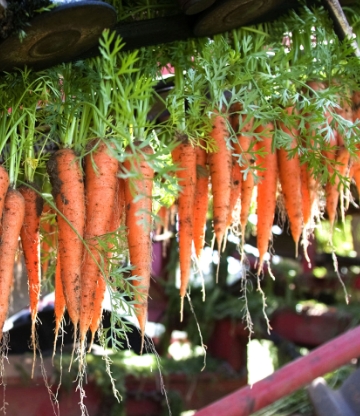
| 2 | Usually eaten raw, but with the natural protection or sepratation from the ground | Medium | Apples, carrots, tomatoes |
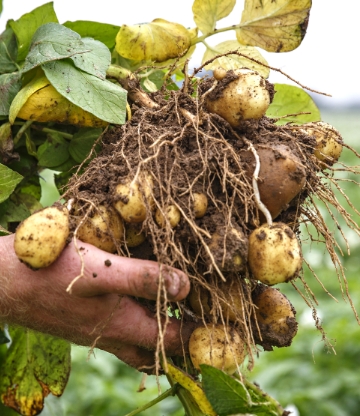
| 3 | Normally cooked before eating | Lower | Potatoes, leeks, swedes |
Summary of the proposed changes
Standards are more clearly proportionate to crop risk, given the wide variety of crops, systems and food safety considerations that Fresh Produce covers. Most proposed additions are directed towards relevant higher-risk crops; lower-risk growers would not be asked to comply with every proposal in the complete Fresh Produce document.
Food-safety controls are strengthened, where risk justifies it. The TAC has proposed that the recent Leafy Salads add-on be incorporated into the core standards for other higher-risk crops (applicable risk categories 0 and 1). Key areas include field and site risk assessment, irrigation water, composts and manures, pre-harvest controls, flooding, training verification, microbiological swabbing in packhouses and protection from condensate contamination in cold stores.
Overall, requirements are clearer and duplication is consolidated. Requirements repeated across Harvesting and Produce Packing and Site Operations are proposed to be brought together where appropriate to avoid duplication and streamline the assessment process. Examples include food-safety policies and training, visitor management, personal protective equipment, toilet provision and return-to-work following illness. The purpose is to assess compliance once across the whole business rather than separately at each stage. The proposals protect assurance value and supply-chain confidence. The review is not intended to make the standards shorter at any cost. Controls that continue to protect food safety, supply-chain confidence or important benchmarking arrangements need to remain. The proposals preserve requirements needed for GLOBALG.A.P. and SAI Platform benchmarking, as well as recognition from multiple retailers and customers.
Standards review: what’s been proposed
A clearer, better structured set of requirements with an emphasis on the things that make a difference to the pigs, the business and the customer. Proposed changes are grouped into themes below. Select a theme to read the detail.
Robust food safety due dilligence for high-risk crops
Red Tractor is incorporating the leafy salads add-on content into the core standards for all other high risk crops (categories 0 and 1).
Why
This strengthens the control of key food safety risks in growing ready-to-eat fresh produce. Red Tractor standards provide members with credible, robust food safety due diligence and this has been re-emphasised through work to create the leafy salads add-on, which was requested by the industry following a food scare in 2024. The proposal provides security and confidence for all in the supply chain and demonstrates to customers and consumers there is a collective will to preserve and enhance Red Tractor’s standing as a global leader for food safety.
What it means in practice
The TAC proposes integrating additional content from the add-on into core standards, such as additional site risk assessment and water risk assessment requirements, management of composts and manures and pre-harvest checks for all high-risk crops. While streamlining is planned to remove unneeded complexity and duplication, the Sector Board and TAC collectively agreed to prioritise detail and clarity over reducing text length.
Audit burden concerns for low-risk crops
The TAC has reorganised various sections of the standards to reduce the assessment checklist while maintaining and in some cases enhancing the member’s due diligence.
Why
We have heard and understood concerns from growers of lower risk crops about audit burden and have also commissioned independent research to better understand this concern.
What it means in practice
Audit duplication across multiple assurance schemes is clearly felt most acutely by growers of lower risk crops (particularly potatoes and peas). The proposals have been developed with the aim of balancing these two ambitions and using the crop risk categories to target requirements in the most pragmatic and proportionate way.
What’s not changing
- Lower-risk crops are not being asked to adopt all controls designed for higher-risk crops.
- Consolidating a duplicated requirement does not remove the underlying obligation.
- Important food-safety, assurance and benchmarking controls are not being removed simply to shorten the standards.
- The proposed standards are not final until consultation feedback has been considered.
- The standards consultation does not itself change assessment cycles, the assessment process or supporting technology.

Download the pdf of proposed changes
Read the existing Fresh Produce standards
Review the proposed changes in detail and take part in the consultation
This consultation is open to all stakeholders with an interest in British food and farming. The consultation is open for six weeks, and will close on 22 December 2026.
The Fresh Produce Sector Board wants to hear all points of view, and are particularly interested in whether how the proposals work for your farm or business.
Tell us where a requirement would be difficult, unclear or disproportionate on your system, and whether there is a better way to word it or a better way to evidence it.
We value input from all stakeholders, particularly feedback that will help us to improve the efficiency and effectiveness of farm assessments. Small changes count – in the last standards review, single-word changes proposed by respondents were adopted because they made a standard clearer.
To ensure your feedback is considered, please use the online form. Feedback shared via email or verbally cannot be incorporated into overall analysis.
What comes next
Feedback will be shared with the Fresh Produce Technical Advisory Committee and Sector Board for their consideration before updates to the standards are confirmed in 2027. They will either agree final proposals, make changes in response to feedback, or return specific areas for further consultation if needed. Once standards are agreed assessor training, operational updates and UKAS approval follow with the – final standards will be published at least three months before implementation.
Review the proposals and share your feedback