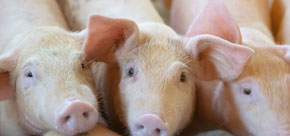
Pigs Standards
Download Pigs Standard Manual (including Enhanced Welfare Outdoor Bred and Free Range)
Download what’s changing to core standards –
HOUSING, SHELTER AND HANDLING FACILITIES Version 5.2
Click to view
Key – Those standards which have greater significance (all other standards are normal)
Recommendation – Those which do not affect certification
New – A completely new standard which the member must now adhere to
Revised – A standard that has changed and requires the member to take some different or additional action to before
Upgraded – The standard has been upgraded to a Key standard or from a Recommendation to a full standard
Appendix – Referenced in ‘How you will be measured’. Indicates that additional information is provided in the Appendices, which are available at the end of each section.
PF.HF.1 Key
Housing must be constructed and maintained to provide a safe and secure environment for livestock
How you will be measured
PF.HF.1.a
PF.HF.1.b
PF.HF.1.c
PF.HF.2
Facilities must provide a comfortable thermal environment
How you will be measured
PF.HF.2.a
PF.HF.2.b
PF.HF.2.c
PF.HF.2.1
Contingency measures must be put in place during extreme weather* to minimise impact on pig welfare
*unusually hot or cold weather, wide fluctuations in external temperature, snow, severe wet weather, ventilation failure
How you will be measured
PF.HF.2.1.a
PF.HF.2.1.b
Extreme Weather Contingency Plan
PF.HF.2.3
Where there is insufficient self-ventilation and forced or automatic ventilation is used, there must be an alarm system in place to warn of failure
How you will be measured
PF.HF.2.3.a
PF.HF.2.3.b
Alarm check record
PF.HF.2.4
Back-up provision must be available in case of ventilation failure
PF.HF.3
Floors must be constructed and maintained in a manner that minimises risk of injury to pigs
How you will be measured
PF.HF.3.a
PF.HF.3.b
PF.HF.3.2 Key
All pigs must have access at all times to a solid and bedded lying area (NEW)
How you will be measured
PF.HF.3.2.a
PF.HF.3.2.b
PF.HF.3.3 Key
Outdoor access must be provided on a permanent basis (NEW)
How you will be measured
PF.HF.3.3.a
PF.HF.3.3.b
PF.HF.4 Key
Conditions must be managed to ensure livestock are able to keep clean
How you will be measured
PF.HF.4.a
PF.HF.4.b
PF.HF.4.c
PF.HF.4.d
PF.HF.5
Lighting in housing must allow normal behaviours, rest and effective inspection of livestock
How you will be measured
PF.HF.5.a
PF.HF.5.b
PF.HF.5.c
PF.HF.5.d
PF.HF.5.e
PF.HF.6 Key
Growing pigs must be provided with sufficient space
(REVISED)
How you will be measured
PF.HF.6.f
PF.HF.6.g
PF.HF.6.2
Tiered cages are not permitted
PF.HF.6.4
Pigs must always be able to see other pigs, except where the pig is isolated for veterinary reasons, or whilst sows/gilts are in farrowing pens
PF.HF.7
Livestock must be kept in appropriate groups (REVISED)
How you will be measured
PF.HF.7.a
PF.HF.7.c
PF.HF.7.d
Letter from Red Tractor indicating evidence has been reviewed and found satisfactory
PF.HF.10
Facilities must be available on-farm that enable the loading and unloading of livestock with minimal stress and risk of injury to livestock
How you will be measured
PF.HF.10.a
PF.HF.10.b
PF.HF.10.c
PF.HF.10.d
PF.HF.11
Where pigs are not held in their normal accommodation prior to transport, the area must be managed appropriately (REVISED)
How you will be measured
PF.HF.11.a
PF.HF.11.b
PF.HF.11.c
More Standards
Download Pigs Standard Manual (including Enhanced Welfare Outdoor Bred and Free Range)
Download what’s changing to core standards –