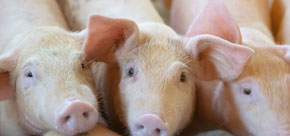
Pigs Standards
Download Pigs Standard Manual (including Enhanced Welfare Outdoor Bred and Free Range)
Download what’s changing to core standards –
Husbandry Procedures Version 5.2
Click to view
Key – Those standards which have greater significance (all other standards are normal)
Recommendation – Those which do not affect certification
New – A completely new standard which the member must now adhere to
Revised – A standard that has changed and requires the member to take some different or additional action to before
Upgraded – The standard has been upgraded to a Key standard or from a Recommendation to a full standard
Appendix – Referenced in ‘How you will be measured’. Indicates that additional information is provided in the Appendices, which are available at the end of each section.
PG.HP.1
Husbandry procedures must be carried out appropriately
(REVISED)
How you will be measured
PG.HP.1.a
PG.HP.1.b
PG.HP.1.c
PG.HP.1.d
PG.HP.1.e
PG.HP.1.f
- Record(s) of persons that perform husbandry procedures
- VHP
PG.HP.2 Key
Surgical castration is not permitted
How you will be measured
PG.HP.2.a
Processor permission
PG.HP.3
Routine tail docking is prohibited. Where tail docking is carried out in exceptional circumstances as a last resort under veterinary direction, there must be documented evidence in place to justify the need
How you will be measured
PG.HP.3.a
PG.HP.3.b
- QVRs
- Documented veterinary review of risk of tail biting and need for docking
PG.HP.3.1 Key
Measures must be in place on all units to minimise risk of tail biting and avoid the need for tail docking
How you will be measured
PG.HP.3.1.a
PG.HP.3.1.b
PG.HP.3.1.c
PG.HP.3.1.d
- Documented risk assessment
- Documented action plan
PG.HP.3.2
Tail docking is carried out appropriately (REVISED)
How you will be measured
PG.HP.3.2.a
PG.HP.3.2.b
PG.HP.3.2.c
PG.HP.3.2.d
PG.HP.3.2.e
PG.HP.3.2.f
List of those deemed competent in VHP
PG.HP.4
Routine teeth reduction is prohibited
How you will be measured
PG.HP.4.a
PG.HP.4.b
- QVRs
- Documented veterinary review justifying need for tooth reduction
PG.HP.4.1
Teeth reduction must be carried out appropriately
How you will be measured
PG.HP.4.1.a
PG.HP.4.1.b
PG.HP.4.1.c
PG.HP.4.1.d
List of those deemed competent in VHP
PG.HP.4.2
It is recommended to grind rather than clip teeth (NEW)
PG.HP.5
Nose ringing must only be carried out by demonstrably competent persons
How you will be measured
PG.HP.5.a
List of those deemed competent in VHP
PG.HP.5.1
Nose-ringing may only be carried out in accordance with the Scheme requirements
How you will be measured
PG.HP.5.1.a
PG.HP.5.1.b
PG.HP.5.1.c
- AHDB’s Tail Biting WebHAT (Web-based Husbandry Advisory Tool) provides information about the key risks for tail biting and practical suggestions to help reduce them on farm. There are a range of templates available for recording risk factors, incidents of tail biting, early warning signs and likely causes https://webhat.ahdb.org.uk/
- AHDB guidance on teeth reduction for piglets: https://ahdb.org.uk/knowledge-library/teeth-reduction-for-piglets
More Standards
Download Pigs Standard Manual (including Enhanced Welfare Outdoor Bred and Free Range)
Download what’s changing to core standards –
HP.1 – *Husbandry procedures referenced in the Red Tractor Pigs Scheme are as follows: ear tagging/notching, slapmarking, tattooing, tusk trimming, tail docking, teeth reduction and nose-ringing.
‘Under veterinary direction’ means that the veterinary surgeon instructs the farmer/stockperson as to the task(s) to be performed, but is not necessarily present when it is carried out. A person is considered “competent” when they can demonstrate they understand the tasks they are required to do and how to undertake them correctly, e.g. how to use equipment